
What Is In-Home Respite Care and Its Benefits

Updated: Mar 4

Caring for an elderly loved one in Abingdon can feel overwhelming when balancing work, family life, and health concerns. The strain of constant caregiving often leaves families searching for practical ways to maintain wellbeing. Understanding in-home respite care clears up common myths and offers families peace of mind by highlighting flexible, personalised support options right in their loved one’s familiar surroundings. Discover how this service helps sustain high-quality care and protect the emotional health of everyone involved.
Table of Contents
Key Takeaways
Point | Details |
Respite Care Benefits | Respite care provides essential support for primary caregivers, preventing burnout while ensuring quality care for dependents. |
Myth Dispelling | Seeking respite care is not an admission of failure; it strengthens caregiving by offering necessary breaks. |
Personalised Plans | Tailored care plans are crucial for effectively addressing the unique needs of both the care recipient and the family. |
Funding Options | Various funding sources exist for respite care, including local authority support and NHS funding, which can help alleviate financial burdens. |
In-home respite care explained and common myths
Respite care provides a crucial support system for families caring for elderly or vulnerable loved ones. At its core, respite care is a temporary relief service designed to support primary caregivers by providing professional care for their dependent family member. Temporary care services help prevent caregiver burnout and ensure sustainable, high-quality family care.
Understanding what respite care involves helps dispel common misconceptions. It is not about replacing family care, but complementing it. Here are key aspects of in-home respite care:
Provides professional care in the familiar home environment
Allows primary caregivers essential breaks and rest periods
Ensures continuous, quality care for the dependent individual
Supports long-term emotional and physical wellbeing of both caregiver and care recipient
Myths about respite care often stem from misunderstandings about its purpose and implementation. Many families worry that seeking respite care means abandoning their loved one or admitting inability to provide care. Respite support actually strengthens caregiving by preventing exhaustion and maintaining the caregiver’s mental health.
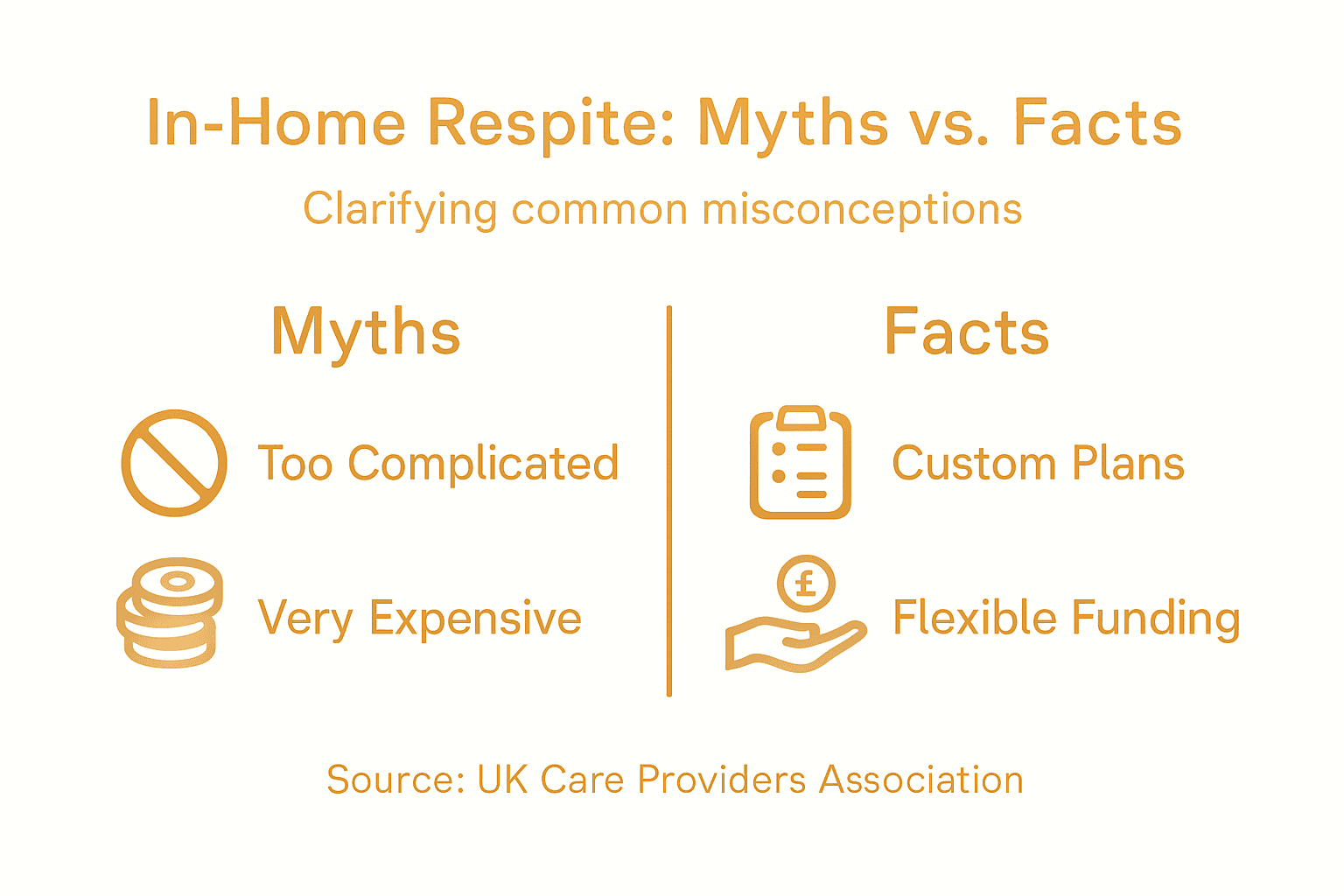
Common myths include believing respite care is complicated to arrange, expensive, or that it will disrupt the care recipient’s routine. In reality, professional care services work closely with families to create seamless, personalised care plans that prioritise comfort and continuity.
Pro tip: Schedule a preliminary consultation with a respite care provider to understand how their services can be tailored to your specific family needs.
Types of support offered in the home
Respite care in the home environment offers a comprehensive range of support services tailored to meet individual needs. Home-based care services provide flexible assistance that ensures comfort and continuity for both the care recipient and their family.
Typical in-home respite care support includes:
Personal care assistance (bathing, dressing, grooming)
Meal preparation and nutrition support
Medication management
Light housekeeping
Companionship and social interaction
Mobility assistance
Transportation for appointments or social activities
Personalised care plans are fundamental to effective home-based respite support. At-home respite services can be arranged for varying durations, from a few hours to overnight stays, depending on the family’s specific requirements.
Professional care providers work closely with families to understand unique needs, ensuring that support is not just functional, but also emotionally supportive. This approach helps maintain the care recipient’s dignity and independence while providing essential relief for primary caregivers.

Pro tip: Request a comprehensive initial assessment to develop a truly personalised respite care plan that addresses all specific care requirements.
Key responsibilities of a respite carer
Respite carers play a critical role in supporting families and providing essential temporary care for vulnerable individuals. Temporary care professionals must possess a unique combination of skills to ensure comprehensive, compassionate support.
The core responsibilities of a respite carer include:
Providing personal care assistance (bathing, dressing, grooming)
Managing medication schedules
Preparing nutritious meals
Supporting mobility and physical activities
Offering emotional companionship
Maintaining a safe home environment
Monitoring health and reporting changes
Engaging in social and recreational activities
Professional care delivery requires more than just task completion. Respite care support demands exceptional interpersonal skills, including empathy, patience, and the ability to build trust quickly with care recipients.
Successful respite carers understand that their role extends beyond physical care. They must be adaptable, sensitive to individual needs, and capable of maintaining the care recipient’s dignity and independence while providing comprehensive support.
Pro tip: Develop a detailed communication log to ensure seamless information transfer between the primary carer and respite care professional.
Arranging and funding respite care services
Arranging respite care requires careful navigation of local support systems and financial resources. Carer support assessments are the first critical step in accessing appropriate temporary care services for vulnerable individuals and their families.
Funding options for respite care typically include:
Local authority financial support
Personal care budgets
Direct payments from social services
Charitable organisation grants
Private self-funding arrangements
NHS continuing healthcare funding
Carer’s allowance supplementary support
Comprehensive funding strategies involve multiple approaches. Local council assessments determine eligibility and potential financial assistance, considering factors such as income, savings, and specific care requirements.
The assessment process typically involves detailed discussions about the care recipient’s needs, the primary carer’s circumstances, and potential support mechanisms. Families should prepare comprehensive medical information, financial documentation, and a clear overview of current care challenges to ensure the most appropriate support is identified.
Pro tip: Request a comprehensive financial assessment from your local council and maintain detailed records of care needs to maximise potential funding support.
Below is a quick reference guide to the main funding options for respite care and their typical eligibility criteria:
Funding Source | How It Works | Common Eligibility Factor |
Local authority support | Assessed contribution from council | Means-tested on income and assets |
Charitable grants | Funds from charities or foundations | Specific needs or diagnosis |
Direct payments | Money given for carer to arrange care | Approval after assessment |
NHS continuing healthcare | NHS funding for complex health needs | Assessed clinical requirement |
Private/self-funding | Family pays full cost directly | Not means-tested, open to all |
Comparing in-home and alternative respite options
Choosing the most appropriate respite care requires careful consideration of individual needs and preferences. Respite care options vary significantly, each offering unique benefits and potential challenges for vulnerable individuals and their families.
Key differences between in-home and alternative respite options include:
Environment familiarity
Personalisation of care
Social interaction levels
Cost considerations
Care intensity
Emotional impact on care recipient
Flexibility of service
In-home respite care provides the most comfortable and familiar setting, allowing individuals to receive personalised support within their own living space. Residential care alternatives offer more structured environments with potentially broader social engagement opportunities.
The choice between in-home and alternative respite care depends on multiple factors, including the care recipient’s cognitive state, personal preferences, medical requirements, and emotional well-being. Some individuals thrive in their home environment, while others benefit from the structured activities and social interactions provided by external care facilities.
The table below summarises the differences and similarities between in-home and alternative respite care options:
Aspect | In-home Respite Care | Alternative Respite Care |
Environment | Care recipient’s own home | Dedicated care facility |
Level of personalisation | Highly tailored to individual needs | More standardised programmes |
Social opportunities | Mainly family or one-on-one companion | Group activities with peers |
Emotional transition | Minimal disruption, familiar routine | Potential adjustment period |
Cost variation | Pay per visit/hour, flexible durations | Often fixed rates, may include room |
Service flexibility | Easily adapted to family schedule | Set by facility policies |
Pro tip: Conduct a comprehensive assessment of the care recipient’s individual needs and preferences before selecting a respite care option.
Discover Compassionate In-Home Respite Care Tailored to Your Family’s Needs
Caring for a loved one can be deeply rewarding yet physically and emotionally demanding. The challenge of balancing ongoing personal care with much-needed breaks is a concern many families face. In-home respite care offers professional support that respects the familiar environment of your home while providing essential relief to primary carers. At Chamomile Care, we understand these demands and provide experienced, compassionate respite services that prioritise both the care recipient’s dignity and the caregiver’s wellbeing.

Explore how our tailored respite care services, backed by over 40 years of expertise and an outstanding CQC rating, can give your family trusted support. Whether assisting with medication management, personal care, or companionship, our team collaborates closely with you to create a seamless care plan that fits your unique circumstances. Start the conversation today by visiting Chamomile Care to learn more about our personalised approach or contact us directly to arrange a consultation. Take the first step towards balancing care and respite with confidence.
Frequently Asked Questions
What is in-home respite care?
In-home respite care is a temporary relief service designed to support primary caregivers by providing professional care for their elderly or vulnerable family members in the comfort of their own home.
What are the benefits of in-home respite care?
In-home respite care allows primary caregivers essential breaks, ensuring their emotional and physical wellbeing. It provides professional care in a familiar environment, ensuring quality support for the care recipient, which ultimately helps maintain their independence.
How does in-home respite care differ from alternative respite options?
In-home respite care offers personalised support tailored to individual needs within the recipient’s own home, while alternative options like residential care provide structured environments and group activities, which may not be as familiar or personalised.
What types of support are typically offered through in-home respite care?
In-home respite care can include personal care assistance, meal preparation, medication management, companionship, mobility assistance, and light housekeeping, all tailored to the specific needs of the care recipient.
Recommended
Comments