
Understanding What Does Care at Home Involve

Updated: Jan 4

Care at home is changing the way support is given to people who want to remain independent in their own familiar spaces. You might assume it is simply about help with daily routines or managing medication. Yet over 835,000 people in England now receive professional home care each year, proving this approach goes far beyond just the basics. The real surprise is how this type of support strengthens emotional wellbeing and preserves dignity, not only for individuals but their entire families.
Table of Contents
Quick Summary
Takeaway | Explanation |
Home care prioritises personal independence. | Home care services enable individuals to maintain self-sufficiency while receiving support tailored to their unique needs. |
Emotional support reduces psychological stress. | Personalised care at home fosters emotional continuity, alleviating anxiety and enhancing the quality of life for both recipients and families. |
Professional carers provide holistic engagement. | Carers not only assist with physical tasks but also offer companionship, promoting social interaction and mental stimulation. |
Family dynamics benefit from home care. | Home care allows families to share caregiving responsibilities, preventing burnout and strengthening emotional connections. |
Flexible care adapts to changing needs. | Ongoing assessments ensure home care services evolve to meet individual health requirements, promoting sustainable strategies for well-being. |
Defining Care at Home: What It Means
Care at home represents a personalised approach to supporting individuals who require assistance while maintaining their independence and comfort within their familiar living environment. This comprehensive care model goes beyond basic physical support, encompassing emotional, social, and practical dimensions of an individual’s wellbeing.
Core Components of Home Care
At its essence, care at home involves professional support tailored to meet an individual’s unique needs. Home care services typically address multiple aspects of daily living, including:
Personal care tasks such as bathing, dressing, and grooming
Medication management and health monitoring
Meal preparation and nutritional support
Household chores and light cleaning
Companionship and emotional support
Transportation assistance
Understanding Personalised Care Dynamics
What distinguishes home care from institutional care is its deeply personalised nature. Professional Care Workers work closely with individuals and their families to develop bespoke care plans that respect personal preferences, cultural backgrounds, and specific health requirements. This approach ensures that care recipients maintain dignity, autonomy, and a sense of control over their daily lives.
Holistic Support Beyond Physical Assistance
Home care extends far beyond practical support. It encompasses emotional connection, mental stimulation, and social engagement. Care Workers become trusted companions who provide not just physical assistance, but also meaningful human interaction, helping prevent isolation and promoting overall psychological wellbeing.
By choosing home care, individuals can continue living in their cherished environments, surrounded by memories and personal belongings, while receiving professional, compassionate support. Read more about why home care agencies matter for families to understand the comprehensive benefits of this personalised care approach.
The Importance of Care at Home for Families
Care at home plays a transformative role in supporting families navigating complex care needs, offering a compassionate alternative to institutional settings that preserves family dynamics and individual dignity. This approach recognises that care is not just about medical support, but about maintaining emotional connections and quality of life.
Emotional and Psychological Benefits
Research from the National Institute for Health and Care Excellence demonstrates that home care significantly reduces psychological stress for both care recipients and their families. By enabling individuals to remain in familiar environments, home care supports emotional continuity and helps maintain critical personal relationships. Families benefit from knowing their loved ones are receiving personalised, professional support while preserving their sense of independence and self-worth.
Key emotional advantages include:
Reduced anxiety about institutional care
Maintenance of family routines and connections
Preservation of personal identity and dignity
Enhanced sense of security and comfort
Continued engagement with familiar surroundings
Practical Support and Family Dynamics
Home care serves as a crucial support mechanism that helps families balance caregiving responsibilities with other life commitments. Professional Care Workers provide expert assistance, allowing family members to focus on emotional support rather than becoming primary physical caregivers. This approach prevents caregiver burnout and helps maintain healthier, more balanced family relationships.

Long-Term Family Wellbeing
Beyond immediate care needs, home care contributes to long-term family resilience. By offering flexible, tailored support, families can develop sustainable care strategies that adapt to changing health requirements. Learn more about home care planning strategies for families to understand how professional support can transform caregiving experiences.
Ultimately, home care represents more than a service, it is a compassionate partnership that respects individual needs while supporting entire family units through complex care journeys.
Below is a comparison table highlighting the differences between care at home and institutional care models, providing a clear overview of their core characteristics and impacts.
Aspect | Care at Home | Institutional Care |
Environment | Familiar home setting | Formal, facility-based setting |
Personalisation | Bespoke care plans focused on individual needs | Standardised routines and structures |
Family Involvement | High, with shared responsibilities | Often limited by institutional protocols |
Emotional Impact | Reduces anxiety, enhances comfort | May increase stress due to unfamiliar surroundings |
Social Connection | Maintains existing relationships and daily routines | Risk of disconnection from friends and family |
Independence | Promotes autonomy and self-sufficiency | May foster dependency on staff and schedules |
Flexibility | Adaptable support as needs change | Less flexible, structured approach |
Key Components of Care at Home Services
Care at home services represent a comprehensive approach to supporting individuals with diverse care needs, encompassing a wide range of professional support designed to promote independence, dignity, and quality of life. These services are meticulously crafted to address the complex and personalised requirements of each individual.
Personal Care and Daily Living Support
Home care services typically include essential assistance with personal care tasks that enable individuals to maintain their daily routines and personal hygiene. Professional Care Workers provide compassionate support in critical areas such as:
Bathing and personal grooming
Dressing and clothing management
Mobility assistance and physical support
Toileting and continence care
Eating and nutritional support
Medical and Health Management
Beyond physical assistance, care at home services integrate crucial health monitoring and medical support. This comprehensive approach ensures that individuals receive professional healthcare management within the comfort of their own environment. Care Workers work closely with healthcare professionals to:
Administer prescribed medications
Monitor vital signs and health conditions
Coordinate medical appointments
Assist with rehabilitation exercises
Manage chronic health conditions
Emotional and Social Engagement
Recognising that care extends beyond physical needs, home care services prioritise emotional and social wellbeing. Care Workers become trusted companions who provide meaningful interaction, mental stimulation, and emotional support. Learn more about quality standards in home care services to understand the holistic approach to personalised care.
The goal of these multifaceted services is to create a supportive, dignified environment that empowers individuals to live fulfilling lives while receiving professional, compassionate care tailored to their unique needs.
The table below breaks down the key components of care at home services, offering a concise overview of the main support areas provided to individuals and families.
Care Component | Description |
Personal Care | Assistance with bathing, dressing, grooming, mobility, and hygiene |
Health Management | Medication administration, monitoring conditions, managing appointments |
Nutritional Support | Meal preparation, support with eating, ensuring dietary needs are met |
Household Assistance | Light cleaning, laundry, everyday domestic tasks |
Emotional Support | Meaningful companionship, preventing isolation, offering reassurance |
Social Engagement | Facilitating interaction, activities, and mental stimulation |
Transportation Assistance | Help with travel to appointments and community activities |
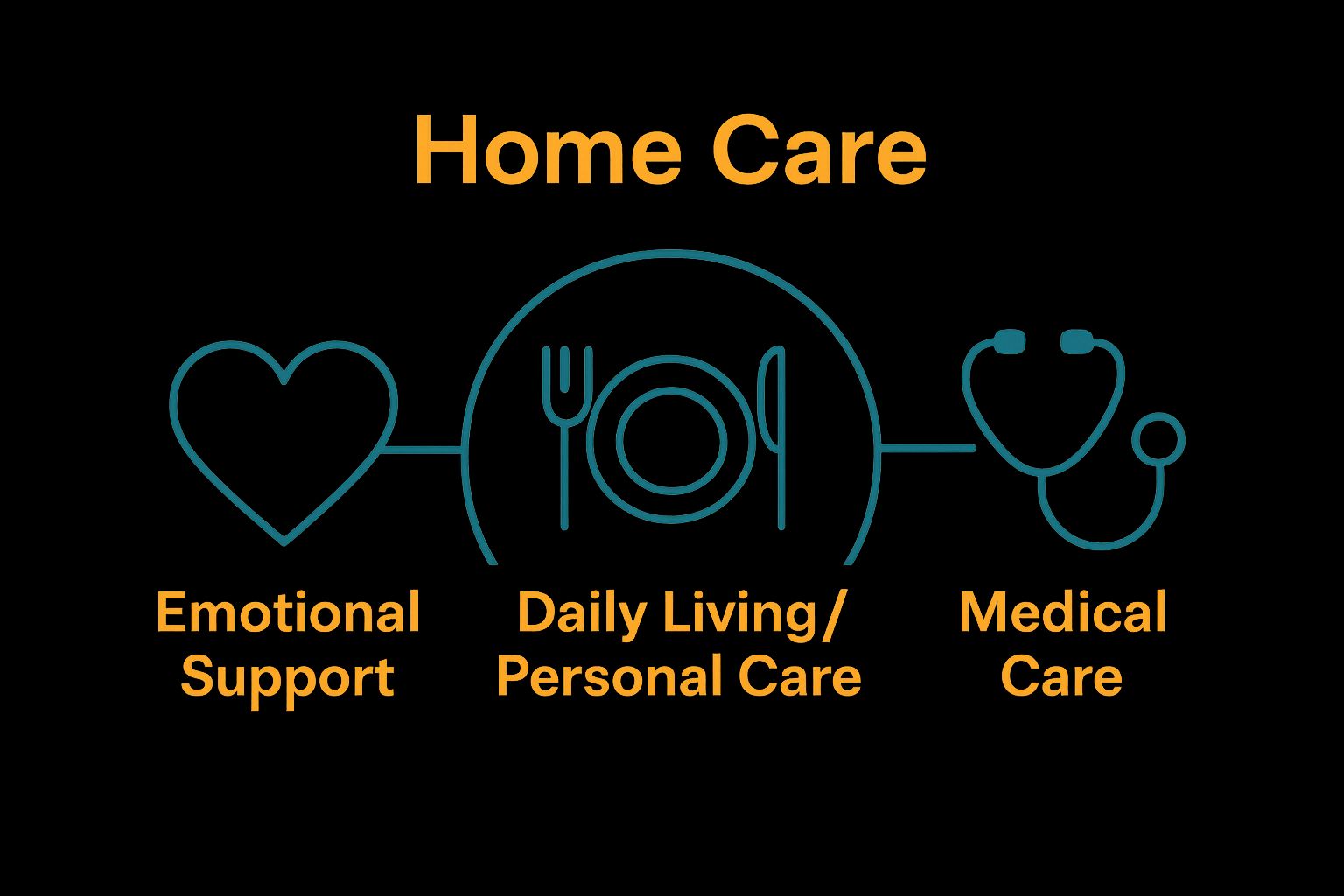
How Care at Home Is Delivered
Care at home delivery represents a sophisticated, nuanced process that prioritises individual needs, professional expertise, and personalised support. This comprehensive approach transforms traditional care models by creating flexible, responsive services that adapt to each person’s unique requirements and circumstances.
Initial Assessment and Care Planning
Research from Skills for Care highlights the critical importance of thorough initial assessments in home care delivery. Professional care managers conduct comprehensive evaluations that explore physical health, emotional wellbeing, personal preferences, and specific support requirements. This detailed assessment forms the foundation for developing a bespoke care plan that addresses:
Individual medical needs
Personal care preferences
Lifestyle considerations
Specific health conditions
Potential support challenges
Structured Care Delivery Approach
Once a personalised care plan is established, professional Care Workers implement a structured yet flexible approach to service delivery. This involves scheduled visits tailored to the individual’s specific needs, with carefully trained professionals providing support ranging from brief assistance to comprehensive daily care. Carers maintain detailed documentation, ensuring consistent communication between healthcare professionals, families, and the care recipient.
Continuous Monitoring and Adaptation
Home care delivery is not a static process but a dynamic, evolving journey of support. Regular review meetings allow for ongoing assessment and adjustment of care strategies. Explore home care planning tips to understand how families can actively participate in this collaborative approach. Care Workers consistently evaluate the effectiveness of support strategies, making real-time adjustments to ensure the highest quality of care and maintaining the individual’s independence and dignity.
Ultimately, care at home delivery represents a compassionate, professional partnership that respects individual autonomy while providing expert, personalised support.
Understanding the Impact of Care at Home on Quality of Life
Care at home transcends traditional healthcare by fundamentally transforming an individual’s lived experience, offering a holistic approach that nurtures physical, emotional, and psychological wellbeing. This personalised support model directly influences quality of life by preserving independence, dignity, and personal identity.
Psychological and Emotional Restoration
Research from the Social Care Institute for Excellence demonstrates that maintaining familiar environments significantly contributes to psychological stability and emotional resilience. Home care services create a sense of continuity and security, mitigating feelings of displacement and vulnerability. By enabling individuals to remain in their cherished spaces, care at home supports:
Preservation of personal memories and connections
Reduced anxiety and emotional stress
Enhanced sense of control and autonomy
Maintenance of existing social networks
Continued engagement with personal routines
Physical Health and Independence
Contrary to institutional care models, home care prioritises promoting physical capabilities and independence. Professional Care Workers are trained to provide supportive assistance that encourages self-sufficiency, rather than creating dependency. They implement strategies that:
Support mobility and physical rehabilitation
Provide personalised exercise guidance
Manage chronic health conditions proactively
Adapt environments to enhance safety
Monitor health progression systematically
Social Connection and Mental Stimulation
Isolation can significantly diminish quality of life for vulnerable individuals. Home care services actively combat this by providing meaningful social interaction and mental stimulation. Explore our guide on home care planning to understand how comprehensive care supports holistic wellbeing. Care Workers become trusted companions who engage individuals through conversation, shared activities, and emotional support, preventing cognitive decline and maintaining social connections.
Ultimately, care at home represents a compassionate approach that recognises each individual’s inherent dignity, potential, and right to live a fulfilling, supported life.
Experience the Confidence of Truly Personalised Home Care
If you are exploring the world of care at home and feeling anxious about whether your loved one’s needs will be fully met, you are not alone. The article highlights key pain points such as the worry over maintaining dignity, ensuring quality personalised support, and keeping family bonds intact while receiving care. Chamomile Care understands these concerns. With over 40 years of specialist experience and an outstanding track record, we provide bespoke support plans shaped around the unique needs described in What Does Care at Home Involve. Our approach ensures every aspect of well-being is addressed, giving you peace of mind from day one.

Take the first step towards compassionate, accredited care that values independence, security, and quality of life. Discover genuine stories from families and see why our service is trusted by so many on our homecare.co.uk page. Learn about who stands behind our care on our meet the team page. For answers and tailored guidance, contact us directly or visit Chamomile Care today. Do not wait—secure expert support for your family when it matters most.
Frequently Asked Questions
What is care at home?
Care at home is a personalised support service that helps individuals maintain their independence and comfort while receiving assistance with daily activities in their familiar environment.
What types of services are included in care at home?
Care at home services typically include personal care, medication management, meal preparation, household assistance, companionship, and transportation help, tailored to meet individual needs.
How is a care plan developed for home care?
A care plan is created after a comprehensive assessment by professional care managers, considering the individual’s medical needs, personal preferences, and lifestyle. This plan is customised to ensure it meets the unique requirements of the person receiving care.
What are the emotional benefits of choosing care at home?
Choosing care at home provides emotional continuity, reduces anxiety about institutional settings, preserves personal identity and dignity, and enhances the sense of security and comfort by allowing individuals to remain in their cherished environments.
Recommended
Comments