
Essential Home Care Planning List for Families and Clients


Planning care for a loved one at home often feels overwhelming, with so many details and emotions to consider. Yet, most people miss a crucial starting point. A recent survey found that less than half of families thoroughly assess daily capabilities before arranging care services. This single step can make all the difference, saving time and heartache while ensuring your loved one’s dignity and comfort.
Table of Contents
Quick Summary
Key Point | Explanation |
1. Assess Care Needs Thoroughly | Evaluate physical, emotional, and practical needs to craft a personalised care strategy. |
2. Identify Support Services Early | Research local resources, government programmes, and community support networks for assistance. |
3. Create a Detailed Care Plan | Develop a comprehensive care plan that includes all aspects of daily living and medical needs. |
4. Involve Healthcare Professionals | Engage with doctors and family to ensure collaborative and effective care planning. |
5. Monitor and Adjust Regularly | Schedule consistent reviews of the care plan to adapt to changing needs and circumstances. |
Step 1: Assess the Care Needs of Your Loved One
Beginning a home care planning journey requires understanding your loved one’s unique support requirements. This crucial first step involves a comprehensive evaluation of physical, emotional, and practical needs that will form the foundation of a personalised care strategy. A thorough assessment helps identify specific areas where support is most essential, ensuring dignity, comfort, and quality of life.
The assessment process starts with open, compassionate communication with your loved one. Listen carefully to their perspectives, concerns, and preferences. Observe their daily functioning across multiple domains including personal hygiene, mobility, medication management, nutrition, and emotional wellbeing. Consider both physical limitations and cognitive capabilities. Sometimes family members might notice challenges that the individual themselves has not fully acknowledged.
Our comprehensive home care planning guide recommends documenting current capabilities systematically. Track specific areas where assistance might be required, such as bathing, dressing, meal preparation, household management, and social engagement. Professional healthcare providers can offer invaluable insights during this process. Consulting with your loved one’s general practitioner, a geriatric specialist, or an occupational therapist can provide objective assessments of functional abilities and potential support needs.
Key areas to evaluate during your care needs assessment include:
Physical mobility and potential fall risks
Medication management capabilities
Personal hygiene and self-care skills
Nutritional intake and meal preparation abilities
Cognitive function and memory retention
Social interaction and emotional wellbeing
Transportation and outdoor mobility
Remember that care needs are dynamic and will evolve. What works today might require adjustment in coming months. Approach this assessment with flexibility, patience, and genuine compassion. The goal is not just identifying limitations but understanding how to maintain your loved one’s independence, dignity, and quality of life while providing necessary support.
Successful completion of this step means having a clear, compassionate understanding of your loved one’s current capabilities, challenges, and support requirements.
Below is a checklist table summarising key areas to assess when evaluating your loved one’s care needs, helping you systematically document capabilities and support requirements.
Assessment Area | What to Observe | Why It Matters |
Physical mobility | Ability to move around and risk of falls | Ensures safety and independence |
Medication management | Ability to take medication as prescribed | Prevents missed doses or errors |
Personal hygiene/self-care | Skills in bathing, dressing, grooming | Maintains dignity and wellbeing |
Nutrition and meal prep | Skills preparing meals and maintaining intake | Supports health and daily function |
Cognitive function/memory | Ability to remember and process information | Identifies support for daily tasks |
Social/emotional wellbeing | Level of interaction and mood | Supports mental health and engagement |
Transport/outdoor mobility | Ability to access transport and go out safely | Aids independence and social access |
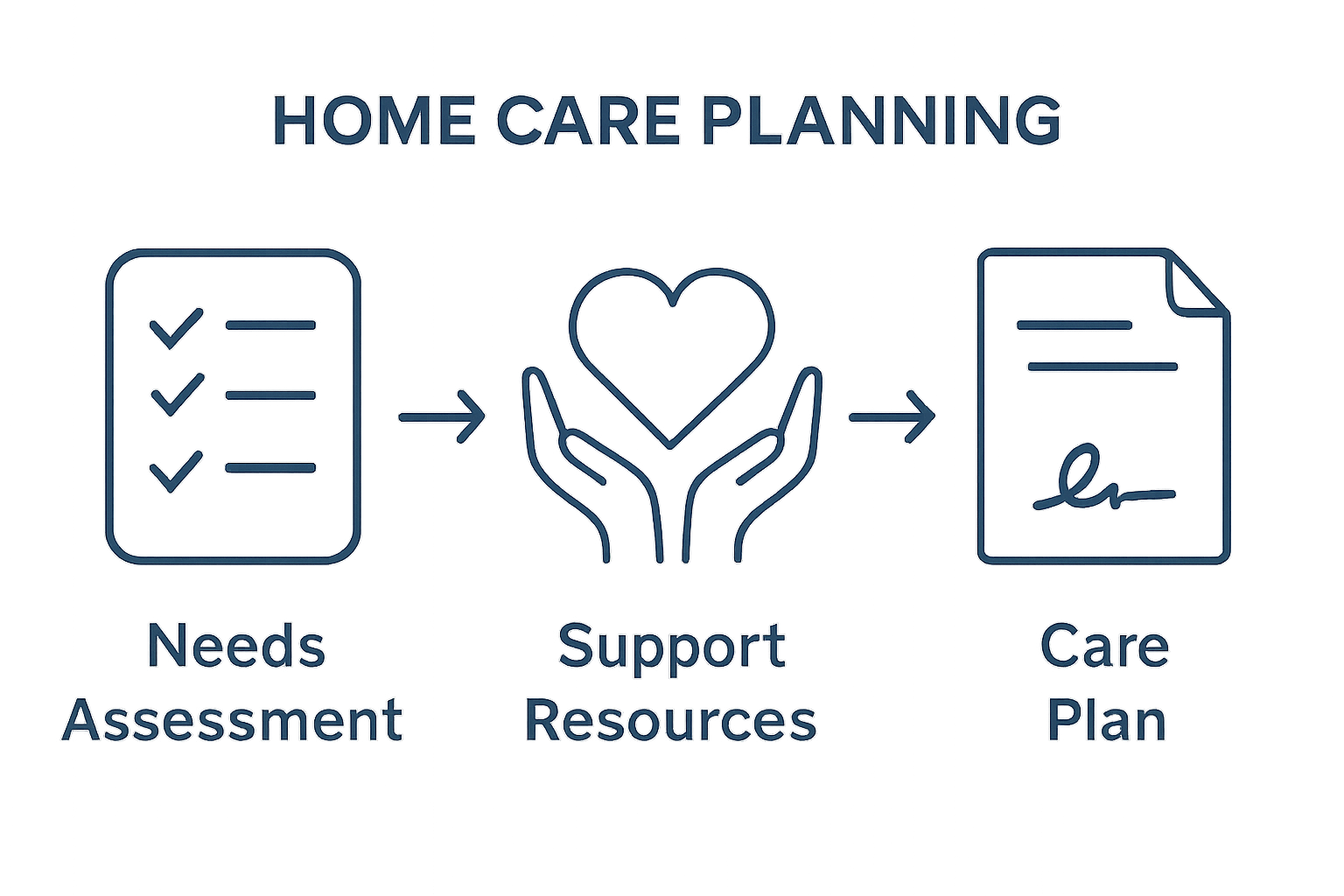
Step 2: Identify Available Resources and Support Services
After completing a comprehensive care needs assessment, the next critical step involves identifying and connecting with appropriate support services. This stage transforms your understanding of care requirements into actionable strategies that provide practical assistance for your loved one. Navigating available resources requires patience, research, and a proactive approach.
Begin by reaching out to local social services and exploring government-funded support programmes. Local councils offer comprehensive social care support that can significantly ease your home care planning journey. Contact your local authority’s adult social services department to discuss potential funding, equipment provision, and personalised care packages. These initial conversations can reveal financial assistance options, home adaptation services, and community support networks that might not be immediately apparent.
Family support networks and voluntary organisations represent another crucial resource. Discuss care responsibilities openly with relatives, identifying potential emotional and practical support contributors. Community groups, local charities, and specialised care organisations often provide additional services such as respite care, social activities, and specialised support for specific health conditions. Some organisations offer free counselling, support groups, and practical assistance that can complement professional care services.
Key resources to investigate during this stage include:
Local council social services departments
NHS community healthcare teams
Age-related support charities
Disability support organisations
Community voluntary services
Carer support networks
Local health and wellbeing centres
Financial planning forms an integral part of resource identification. Investigate potential funding sources such as state benefits, disability allowances, and specific care grants. Some individuals might qualify for personal budgets that allow more flexible care arrangements. Consulting a financial advisor specialising in eldercare can provide tailored guidance on managing care-related expenses and exploring funding options.
Successful completion of this step means having a comprehensive understanding of available support services, potential funding sources, and community resources tailored to your loved one’s specific care needs. The goal is creating a supportive ecosystem that enhances quality of life while providing practical, compassionate assistance.
The table below provides a quick reference guide to community resources and support services available for home care, assisting you in identifying practical sources of additional assistance and funding.
Resource Type | Example Providers | Typical Support Offered |
Local council social services | Adult social services, care assessment teams | Funding, care packages, home adaptations |
NHS community healthcare | GPs, district nurses, NHS therapists | Ongoing medical, nursing, and therapy input |
Age/disability charities | Age UK, Parkinson’s UK, Alzheimer’s Society | Emotional support, advice, respite services |
Voluntary services | Community groups, befriending schemes | Social activities, practical assistance |
Carer support networks | Carers Trust, Carers UK | Peer support, information, respite options |
Financial planning support | Financial advisors, benefits specialists | Advice on allowances, grants, personal budgets |
Step 3: Create a Detailed Care Plan Outline
Transforming your initial care needs assessment into a structured, comprehensive care plan represents a pivotal moment in your home care planning journey. This step involves crafting a detailed roadmap that addresses your loved one’s specific requirements, preferences, and potential future challenges. According to NICE guidelines, the most effective care plans are deeply personalised and collaborative.
Begin by sitting down with your loved one and any key family members or healthcare professionals involved in their support network. Create an open dialogue that prioritises their personal wishes and comfort. This collaborative approach ensures the care plan feels supportive rather than restrictive. Document specific daily routines, medical requirements, personal preferences, and emotional needs. Consider both current capabilities and potential future adaptations that might become necessary.
The care plan outline should comprehensively address multiple dimensions of daily living. Include detailed sections covering personal care routines, medication management, dietary requirements, mobility support, social engagement, and medical monitoring. Specify exact times for medication, preferred bathing assistance methods, dietary restrictions, and communication preferences. Be specific about who will provide different aspects of care, including family members, professional caregivers, or specialised healthcare providers.
Key components to include in your care plan outline:
Comprehensive medical history and current health status
Detailed medication schedules and administration protocols
Personal care routine preferences
Mobility and physical assistance requirements
Nutritional needs and dietary restrictions
Social and emotional support strategies
Emergency contact information
Specific health monitoring requirements
Remember that a care plan is not a static document but a living framework that requires regular review and adjustment. Schedule periodic check-ins to assess its effectiveness, allowing for modifications as your loved one’s needs evolve. Flexibility and compassionate communication are essential.

Consider potential future scenarios and build contingency plans that provide peace of mind for both the care recipient and their support network.
Successful completion of this step means having a comprehensive, personalised care plan that clearly outlines support strategies, respects individual preferences, and provides a structured approach to maintaining quality of life and independence.
This table highlights essential components to include in a detailed home care plan, ensuring personalised, comprehensive support based on the assessment and available resources.
Care Plan Component | Details to Include | Purpose |
Medical history/status | Current diagnoses, treatment, allergies | Provides context for ongoing care |
Medication schedule | Specific medicines, timings, administration | Ensures safety and adherence |
Personal care routines | Preferences for bathing, dressing, grooming | Respects dignity and individual wishes |
Mobility/physical support | Walking aids, transfer assistance, exercises | Maintains independence and safety |
Nutrition/dietary needs | Special diets, food preferences, meal times | Supports health and wellbeing |
Social/emotional support | Visiting schedules, activities, companionship | Prevents isolation, supports mental health |
Emergency contacts | Key family/emergency numbers, backup plans | Ensures rapid response for emergencies |
Step 4: Involve Health Professionals and Family Members
Building a collaborative support network is crucial in developing a comprehensive and effective home care strategy. This step focuses on creating meaningful connections between healthcare professionals, family members, and the individual receiving care. Multidisciplinary team involvement is essential for holistic care planning and support.
Initiate conversations with your loved one’s primary healthcare providers, including their general practitioner, specialist consultants, and district nurses. Transparent communication is key to understanding complex medical requirements and potential future care needs. Schedule a comprehensive meeting where all parties can discuss the care plan, share insights, and develop a unified approach. This collaborative process helps identify potential challenges, medication interactions, and specific medical considerations that might impact daily care.
Family involvement requires careful navigation, balancing practical support with emotional considerations. Hold a family meeting that creates space for open dialogue, ensuring everyone understands their potential role and responsibilities. Some family members might provide direct care, while others could offer financial support, emotional assistance, or help with administrative tasks. Establish clear expectations and create a supportive environment that prevents potential conflicts and ensures consistent care delivery.
Key aspects to discuss during professional and family involvement:
Individual medical requirements and treatment plans
Specific care responsibilities and support roles
Communication protocols and information sharing
Financial considerations and resource allocation
Emotional support strategies
Potential future care adjustments
Emergency contact and backup care arrangements
Consider creating a shared digital platform or communication system that allows family members and healthcare professionals to stay updated on care progress. Regular check-ins and transparent reporting help maintain accountability and ensure the care plan remains responsive to changing needs. Some families find weekly or monthly meetings helpful for reviewing progress, addressing concerns, and making necessary adjustments.
Successful completion of this step means establishing a strong, supportive network committed to providing compassionate, coordinated care. By bringing together healthcare professionals and family members, you create a robust support system that prioritises your loved one’s wellbeing, dignity, and quality of life.
Step 5: Monitor and Adjust the Care Plan Regularly
Care planning is a dynamic process that requires ongoing attention, reflection, and adaptation. This crucial step involves creating a systematic approach to monitoring your loved one’s changing needs, ensuring the care plan remains responsive and effective. Regular review and adjustment are fundamental to maintaining high-quality support, allowing for flexibility as circumstances evolve.
Establish a consistent review schedule that allows for comprehensive evaluation of the care plan’s effectiveness. Typically, quarterly reviews provide an optimal balance, though some situations might require more frequent assessments. During these reviews, gather input from the care recipient, family members, and healthcare professionals. Approach these conversations with empathy and openness, creating a supportive environment where everyone feels comfortable sharing observations, concerns, and potential improvements.
Documentation plays a critical role in effective monitoring. Maintain a detailed log of daily care interactions, medical developments, emotional wellbeing, and any significant changes in physical or cognitive capabilities. This systematic tracking helps identify subtle shifts that might require adjustments to the care plan. Consider using digital tools or dedicated care tracking applications that allow multiple family members and care providers to input and review information securely.
Key elements to track during regular care plan monitoring:
Physical health and medical condition changes
Medication effectiveness and potential side effects
Emotional and psychological wellbeing
Mobility and independence levels
Social interaction and engagement
Nutritional intake and dietary changes
Cognitive function and memory progression
Personal comfort and quality of life indicators
Remember that monitoring extends beyond formal review meetings. Maintain open communication channels with your loved one and care providers, creating an environment where concerns can be raised promptly. Be prepared to make immediate adjustments if unexpected challenges arise. Flexibility is crucial, as care needs can change rapidly due to medical developments, emotional circumstances, or natural progression of age-related conditions.
Successful completion of this step means establishing a robust, compassionate monitoring system that prioritises your loved one’s changing needs. By remaining attentive, responsive, and proactive, you create a care approach that adapts seamlessly, ensuring continued comfort, dignity, and quality of life.
Turn Your Home Care Planning List into Personalised Support with Chamomile Care
Creating a home care plan for a loved one can feel overwhelming. You want to ensure dignity, safety, and comfort, but the need to assess care requirements, coordinate resources, and adapt over time can be stressful and confusing. The article highlights challenges such as documenting personal capabilities, identifying trusted support, and ensuring the plan evolves with your loved one’s changing needs. These steps demand expert guidance and compassionate, consistent care.
When you are ready to transform your assessment and planning into real-life quality support, Chamomile Care offers more than advice. As a CQC ‘Outstanding’ accredited provider with over forty years of expertise, we deliver comprehensive, tailored home care solutions for families in Abingdon and beyond. Our approach directly addresses the concerns raised in your care planning journey, offering support with dementia, Parkinson’s, medication management, and daily living so your loved one enjoys both reassurance and independence. Discover how our accredited team meets the highest quality standards, adapts to evolving needs, and is trusted by families across the region at Chamomile Care.

Speak with a friendly care specialist at Chamomile Care today. Do not wait until changing needs create uncertainty. Book your no-obligation consultation now and let us help you put your care plan into action, so your family can move forward with clarity and peace of mind.
Frequently Asked Questions
What is the first step in home care planning?
Beginning with a comprehensive assessment of your loved one’s physical, emotional, and practical care needs is essential. This evaluation forms the foundation of a personalised care strategy that ensures dignity, comfort, and quality of life.
How can I identify the resources and support services available for home care?
Reach out to local social services, explore government-funded support programmes, and discuss care responsibilities with family members. Consider community groups, charities, and specialised organisations that offer additional resources and services.
What should be included in a detailed care plan outline?
Your care plan should encompass medical history, medication schedules, personal care routines, mobility assistance, dietary needs, social engagement strategies, and emergency contact information.
How often should I monitor and adjust the care plan for my loved one?
Establishing a consistent review schedule, typically quarterly, is recommended. However, some situations may require more frequent evaluations to ensure the care plan remains effective and responsive to changing needs.
Recommended

Comments