
Arrange Dementia Care at Home in Oxfordshire: 6 steps
- Michael Ackers

- Mar 11
- 11 min read

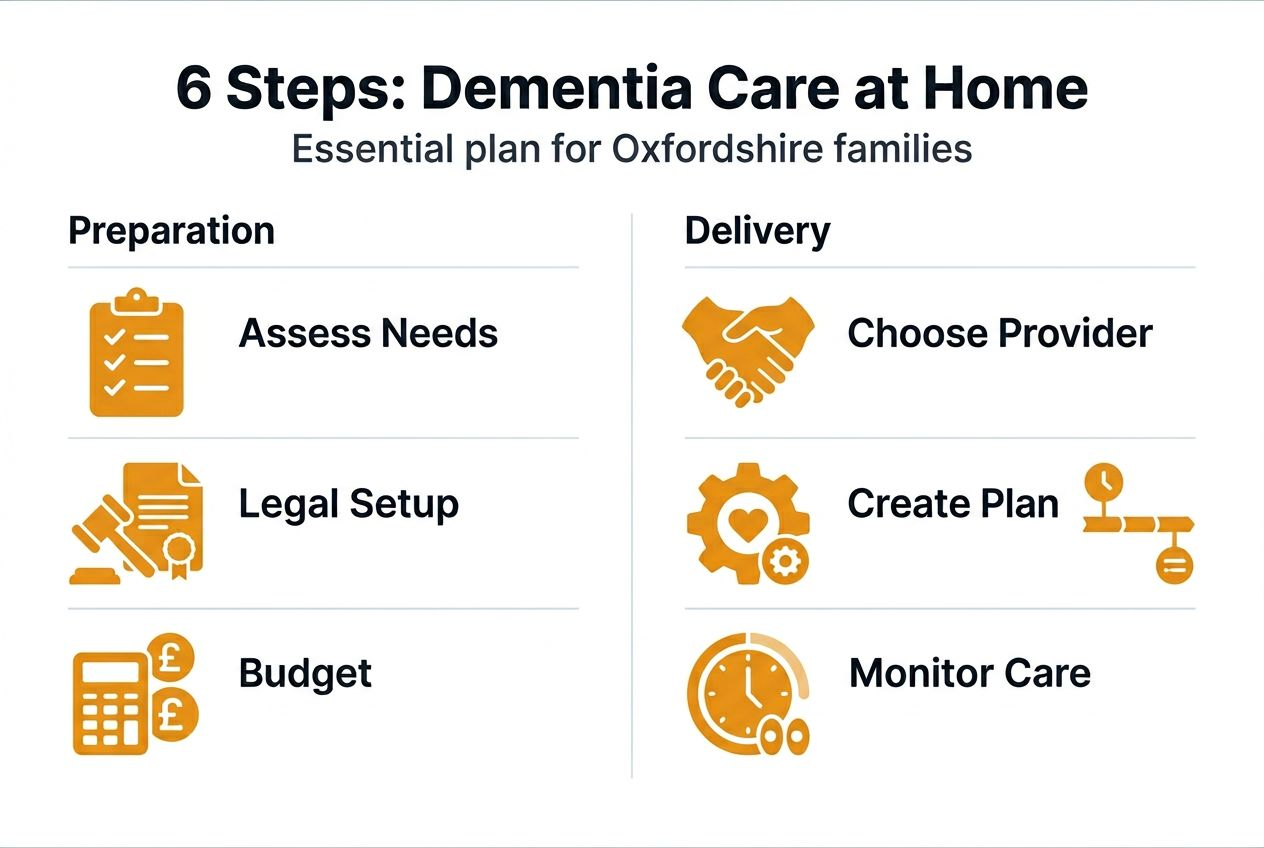
Families caring for loved ones with dementia face overwhelming decisions about personalised home support. Many struggle to navigate Oxfordshire’s care system, unsure where to start or which providers to trust. This guide breaks down six clear steps to arrange compassionate, professional dementia care at home, covering assessments, budgeting, provider selection, and safety planning to help you confidently secure the right support.
Table of Contents
Key takeaways
Point | Details |
Assessment and legal preparation | Complete Lasting Power of Attorney and formal council assessments before arranging care to avoid delays. |
Realistic budgeting | Dementia home care in Oxfordshire costs £30–£40 per hour; plan for progression and emergencies. |
Qualified provider selection | Choose CQC-rated providers with dementia-specific training and local reputation. |
Personalised care plans | Flexible plans tailored to individual needs improve wellbeing and adapt as dementia progresses. |
Safety and quality measures | Door alarms, medication checks, and supervision schedules reduce preventable incidents. |
Understanding dementia care needs
Dementia affects cognitive abilities, memory, and physical function in ways that vary greatly between individuals. Care needs evolve over time, requiring flexible support that adapts to changing abilities. Understanding dementia care means recognising that your loved one may need help with daily tasks, medication management, meal preparation, and emotional reassurance.
Compassionate, skilled home care improves quality of life by maintaining familiar routines and surroundings. Staying at home reduces confusion and anxiety often triggered by unfamiliar environments. Professional care workers trained in dementia support provide dignity, patience, and specialist techniques that enhance daily living.
Family involvement strengthens personalised care planning. You know your loved one’s preferences, history, and personality better than anyone. Sharing this knowledge with care providers ensures support reflects individual needs, cultural values, and emotional connections that matter most.
Key benefits of dementia home care include:
Maintaining independence and familiar surroundings longer
Reducing hospital admissions through proactive health monitoring
Supporting family carers with respite and expert backup
Adapting care intensity as dementia progresses
Prerequisites: legal, financial, and knowledge basics
Before arranging care, secure essential legal authority and financial clarity. Lasting Power of Attorney (LPA) allows you to make financial and health decisions on behalf of your loved one if they lose capacity. LPA registration typically takes 6 to 8 weeks, so start early to avoid delays when care becomes urgent.
Budget planning helps manage dementia care costs realistically in Oxfordshire. Review income sources including pensions, savings, and potential council funding. Understanding what you can afford prevents financial strain later. Council assessments determine eligibility for local authority support, but many families self-fund part or all of their care.
Knowledge of local services reduces delays and improves care choices. Research Oxfordshire County Council’s adult social care process, local memory clinics, and reputable home care agencies. The home care process guide explains how assessments work and what to expect.
Follow these preparation steps:
Register Lasting Power of Attorney for health and finance decisions
Gather financial documents including income, savings, and property details
Research Oxfordshire care providers and CQC ratings
Contact the council to request a care needs assessment
Discuss preferences and concerns with family members
Pro tip: Keep copies of all legal documents, medical records, and assessment reports in one accessible folder. You will need these repeatedly during the care arrangement process.
Step 1: assess care needs and eligibility
Arrange a formal social care needs assessment through Oxfordshire County Council by contacting their adult social care team. This assessment evaluates your loved one’s daily living abilities, health conditions, and support requirements. Social workers visit your home to observe routines and discuss needs with you and your loved one.
Expect the formal care needs assessment and eligibility outcome to take 4 to 8 weeks typically. The council applies national eligibility criteria to determine whether your loved one qualifies for funded support. Even if you plan to self-fund, the assessment provides valuable insights into appropriate care levels.
The assessment identifies the level and intensity of care required. Assessors consider mobility, personal care, medication management, nutrition, and cognitive support needs. They also evaluate risks like wandering, falls, or neglecting self-care. This information shapes your care plan and helps providers understand what support your loved one needs.
Eligibility determines possible local authority funding or financial support. Those with substantial or critical needs may receive council contributions. If your loved one has assets over certain thresholds, you may need to self-fund initially. Dementia care in Oxfordshire varies by location, so ask about services available in your specific area.
Assessment process steps:
Contact Oxfordshire County Council adult social care team
Complete initial screening questions over the phone
Schedule home visit with a social worker or assessor
Discuss daily living challenges and current support
Receive written assessment report and eligibility decision
Review care and support plan recommendations
Step 2: budgeting and understanding dementia care costs
Dementia home care costs in Oxfordshire vary based on care intensity and provider. Home care hourly rates typically range between £30and £40, with specialist dementia support often at the higher end. Weekly costs depend on how many hours your loved one needs and the frequency of visits.
Understanding cost factors helps you budget realistically. Early-stage dementia may require a few hours of companionship and meal support daily, costing £600 to £800 weekly. Advanced dementia needing intensive supervision, personal care, and overnight support can exceed £1000 weekly. Costs increase as care needs progress.
Care level | Typical weekly hours | Approximate weekly cost |
Light support | 15-20 hours | £450-£800 |
Moderate care | 30-40 hours | £900-£1600 |
Intensive care | 50+ hours | £2000+ |
Budget contingencies for care progression and emergencies. Dementia worsens over time, requiring more hours and specialist interventions. Set aside reserves for unexpected hospital stays, equipment, or temporary care increases. Comparing providers helps find cost-effective reliable options without sacrificing quality.
Financial planning tips:
Request detailed quotes from multiple providers specifying hourly rates and minimum visit charges
Ask about packages offering better value for regular weekly hours
Explore council funding contributions if eligible after assessment
Consider benefits like Attendance Allowance to offset costs
Review and adjust budgets quarterly as needs change
Pro tip: Many families underestimate how quickly dementia progresses and care costs rise. Build 20% to 30% contingency into your annual budget to avoid financial shocks later.
Step 3: selecting a qualified dementia care provider
Choosing a CQC-accredited care provider ensures regulated, safe, and quality-assured dementia care. Check Care Quality Commission ratings online, aiming for providers rated ‘Good’ or ‘Outstanding’. Inspect recent inspection reports for details on care standards, staffing, and safeguarding practices.
Evaluate staff qualifications and dementia-specific training. Care workers should hold relevant certifications and receive ongoing training in dementia care techniques, communication strategies, and behaviour management. Ask providers about their recruitment processes, criminal record checks, and supervision arrangements for care staff.
Review provider reputation and family testimonials. Online reviews, word-of-mouth recommendations, and testimonials reveal how providers handle real-world care challenges. Contact families currently using the service to ask about reliability, staff consistency, and problem resolution. Local independent providers often offer better responsiveness and continuity than larger regional agencies.
Key selection criteria include:
CQC rating of ‘Good’ or ‘Outstanding’ with positive inspection reports
Experienced dementia care teams with specialist training
Clear communication channels and care coordination processes
Flexible care packages adapting to changing needs
Local presence in Oxfordshire for quick response times
Transparent pricing with no hidden fees
Dementia care providers in Oxford vary in specialisation and service areas. Interview multiple providers, asking specific questions about their dementia experience, staff-to-client ratios, and care continuity practices. Trust your instincts about whether a provider feels right for your loved one’s personality and needs.
Step 4: personalise the care plan
Collaborate with your chosen care provider and family members to create a personalised care plan reflecting your loved one’s unique requirements. Share information about daily routines, preferences, hobbies, cultural traditions, and communication styles. This context helps carers build rapport and provide meaningful support.

Care plans should be flexible to adapt with dementia progression. What works today may need adjustment in weeks or months. Regular reviews keep the plan effective and aligned with changing abilities. Schedule formal reviews every three months, or sooner if health or behaviour changes significantly.
Involving family ensures emotional, cultural, and personal preferences are met. Your loved one may have strong feelings about mealtimes, bathing routines, or religious practices that care workers must respect. Discussing these details upfront prevents misunderstandings and enhances comfort and dignity.
Essential care plan components:
Personal care routines including bathing, dressing, and toileting assistance
Medication schedules with administration and monitoring protocols
Nutritional needs and meal preparation preferences
Activity and engagement plans supporting cognitive stimulation
Mobility support and fall prevention strategies
Communication approaches tailored to cognitive abilities
Emergency contacts and escalation procedures
Document all care activities in daily logs that track wellbeing, behaviour changes, and incidents. These records help identify patterns, adjust support, and demonstrate care quality. Families should review logs regularly and discuss concerns promptly with care managers.
Step 5: ensuring safety and quality in care
Dementia-specific safety risks require proactive measures to protect your loved one at home. Common risks include wandering, medication errors, falls, neglecting meals, and vulnerability to scams or exploitation. Dementia care safety tips address these concerns through environmental modifications and supervision protocols.
Implement safety measures tailored to your loved one’s abilities and home layout. Door alarms alert carers if someone attempts to leave unsupervised. Medication management systems with locked storage and administration checks prevent errors. Regular supervision schedules ensure someone monitors your loved one during high-risk times.
Safeguarding protocols reduce preventable harm incidents:
Install door sensors and motion detectors in key areas
Remove trip hazards and install grab rails in bathrooms
Use lockable medication dispensers with timed reminders
Secure hazardous items like chemicals, sharp objects, and matches
Create emergency contact lists visible to carers and family
Conduct regular safety audits with care providers
Emergency planning ensures prompt response to crises. Develop clear procedures for medical emergencies, sudden health changes, or safeguarding concerns. All care workers should know who to contact and what actions to take. Keep emergency numbers, medical information, and care plans accessible.
“Effective dementia care balances safety with dignity and autonomy. The goal is not to restrict freedom unnecessarily but to create an environment where your loved one can thrive with appropriate support and protection.”
Monitor care quality through regular communication with care workers and supervisors. Ask questions about your loved one’s mood, engagement, and any incidents. Quality providers welcome feedback and act on concerns quickly to maintain high standards.
Troubleshooting common mistakes and how to avoid them
Families often encounter avoidable pitfalls when arranging dementia care. Learning from these mistakes saves time, money, and stress. Recognising early warning signs helps you to correct course before problems escalate.
Delaying Lasting Power of Attorney registration causes legal and financial complications. Without LPA, you cannot access bank accounts, sell property, or make medical decisions if your loved one loses capacity. Register LPA as soon as dementia is diagnosed, even if your loved one still has decision-making ability.
Underestimating how quickly dementia progresses increases stress and financial pressure. Many families budget for current needs without planning for deterioration. Dementia often advances faster than expected, requiring more intensive support within months. Build flexibility and contingency into your care and budget plans from the start.
Choosing unverified providers risks care quality and safety. Skipping CQC checks or hiring unregulated carers may seem cost-effective initially but exposes your loved one to harm. Always verify qualifications, insurance, and registration before engaging any care provider.
Neglecting safety measures leads to preventable incidents:
Failing to install door alarms allows wandering and potential injury
Poor medication management causes missed doses or overdoses
Inadequate supervision results in falls, burns, or neglect
Ignoring environmental hazards increases accident risks
Plan financial contingencies to manage unforeseen needs. Emergency hospital stays, equipment purchases, or sudden care increases strain budgets. Maintaining reserves equal to two to three months of care costs provides breathing room during crises.
Step 6: expected timelines and outcomes
Understanding realistic timelines helps manage expectations during the care arrangement process. From initial assessment to care starting, the process typically takes 4 to 8 weeks in Oxfordshire. Urgent cases may move faster with priority assessments and expedited provider onboarding.
The arrangement timeline breaks down as follows:
Initial council contact and screening: 1 to 2 days
Formal needs assessment scheduling and completion: 2 to 4 weeks
Eligibility determination and care plan development: 1 to 2 weeks
Provider research, interviews, and selection: 1 to 2 weeks
Care plan finalisation and carer assignment: 3 to 7 days
First care visit and initial review: immediate to 3 days
Regularly updated plans improve wellbeing and safety outcomes. Successful dementia care maintains quality of life, reduces hospital admissions, and supports independence longer. Your loved one should experience stable routines, appropriate stimulation, and dignified personal care.
Measurable outcomes of effective dementia home care include reduced caregiver stress and enhanced patient quality of life. Family members report feeling more supported and less overwhelmed when professional care workers share responsibilities. Your loved one benefits from consistent, skilled support that adapts to their changing needs.
Ongoing monitoring is essential for care effectiveness. Schedule regular reviews with care managers to assess progress, discuss concerns, and adjust support levels. Track key indicators like mood, engagement, nutrition, medication compliance, and incident rates to evaluate care quality objectively.
Additional resources and support networks in Oxfordshire
NHS memory clinics provide specialist dementia assessment and medical advice throughout Oxfordshire. These clinics offer diagnostic services, medication management, and referrals to community support. Contact your GP for referrals to local memory services.
Dementia support groups offer family respite and peer connection. Meeting others facing similar challenges reduces isolation and provides practical coping strategies. Local dementia support in Oxfordshire includes groups run by Alzheimer’s Society, Age UK, and community centres.
Charitable organisations provide financial and practical assistance. Age UK Oxfordshire offers advice on benefits, care options, and legal matters. Dementia UK operates Admiral Nurse services providing specialist support for families navigating dementia care. These free resources complement paid care services.
Caregiver therapy supports emotional wellbeing and resilience:
Counselling helps process grief, guilt, and stress associated with dementia care
Therapy for caregivers prevents burnout and supports mental health
Respite services give family carers breaks to recharge
Online support forums connect carers for advice and encouragement
Local resources worth exploring include Oxfordshire County Council’s adult social care directory, community transport services for medical appointments, and assistive technology schemes offering equipment loans. Building a support network around professional care services strengthens your loved one’s overall care system.
Find expert dementia home care in Oxfordshire with Chamomile Care
Chamomile Care delivers ‘Outstanding’ CQC-rated Caring in Oxford and surrounding areas, bringing over 40 years of specialist experience to families across Oxfordshire. Our experienced local staff provide personalised, compassionate support tailored to your loved one’s unique needs and preferences.

We offer flexible care packages that adapt as dementia progresses, ensuring continuity and consistency throughout your care journey. From light companionship to intensive 24-hour support, our qualified care workers deliver dignified, person-centred care in familiar home surroundings. Services extend across Oxfordshire including home care in Iffley and complex care in Rose Hill, with rapid response times and local knowledge that matter.
Contact our team today for tailored advice and care planning. We guide you through assessments, help you understand options, and create care plans that truly reflect your family’s needs and values.
Frequently asked questions
How long does it take to arrange dementia home care?
Arranging dementia home care typically takes 4 to 8 weeks from initial contact to care starting. This includes the council needs assessment, eligibility determination, provider selection, and care plan development. Legal preparations like Lasting Power of Attorney registration add 6 to 8 weeks, so begin those processes as early as possible. Urgent cases may receive priority assessments and faster provider onboarding if immediate risks exist.
What funding options are available for dementia home care in Oxfordshire?
Oxfordshire County Council assessments determine eligibility for local authority funding based on care needs and financial means. Those with substantial or critical needs and limited assets may qualify for council contributions or personal budgets. Self-funding remains common where savings or property assets exceed thresholds. Some families use Attendance Allowance or other benefits to offset costs.
How do I know if a dementia care provider is reputable?
Check the Care Quality Commission website for provider ratings and inspection reports, aiming for ‘Good’ or ‘Outstanding’ ratings. Verify staff hold relevant qualifications and receive dementia-specific training regularly. Seek testimonials from current clients’ families and ask detailed questions about safeguarding, supervision, and incident management during interviews.
Can care plans be adjusted as dementia progresses?
Yes, effective care plans must be regularly reviewed and adapted as dementia progresses and needs change. Family members and care professionals collaborate during quarterly reviews or sooner if significant changes occur. Flexibility ensures your loved one receives appropriate support at every stage, maintaining wellbeing and safety as abilities evolve.
Recommended
Comments