
Complete Guide to Why Independent Care Agencies Matter


Over 80 percent of home care services in England are now delivered by independent agencies, offering families more flexibility than ever before. Choosing the right support for a loved one can feel confusing when faced with so many options and terms. Understanding what makes independent care agencies unique will help you find the most suitable, personalised care and peace of mind for your family.
Table of Contents
Key Takeaways
Point | Details |
Personalised Care Options | Independent care agencies offer custom care packages tailored to individual needs, enhancing the quality of life for clients. |
Flexibility and Adaptability | These agencies provide flexible scheduling and responsive care models that evolve with the client’s changing requirements. |
Accreditation and Quality Assurance | Regulatory bodies like the Care Quality Commission ensure that independent agencies meet high standards of care and safety for service users. |
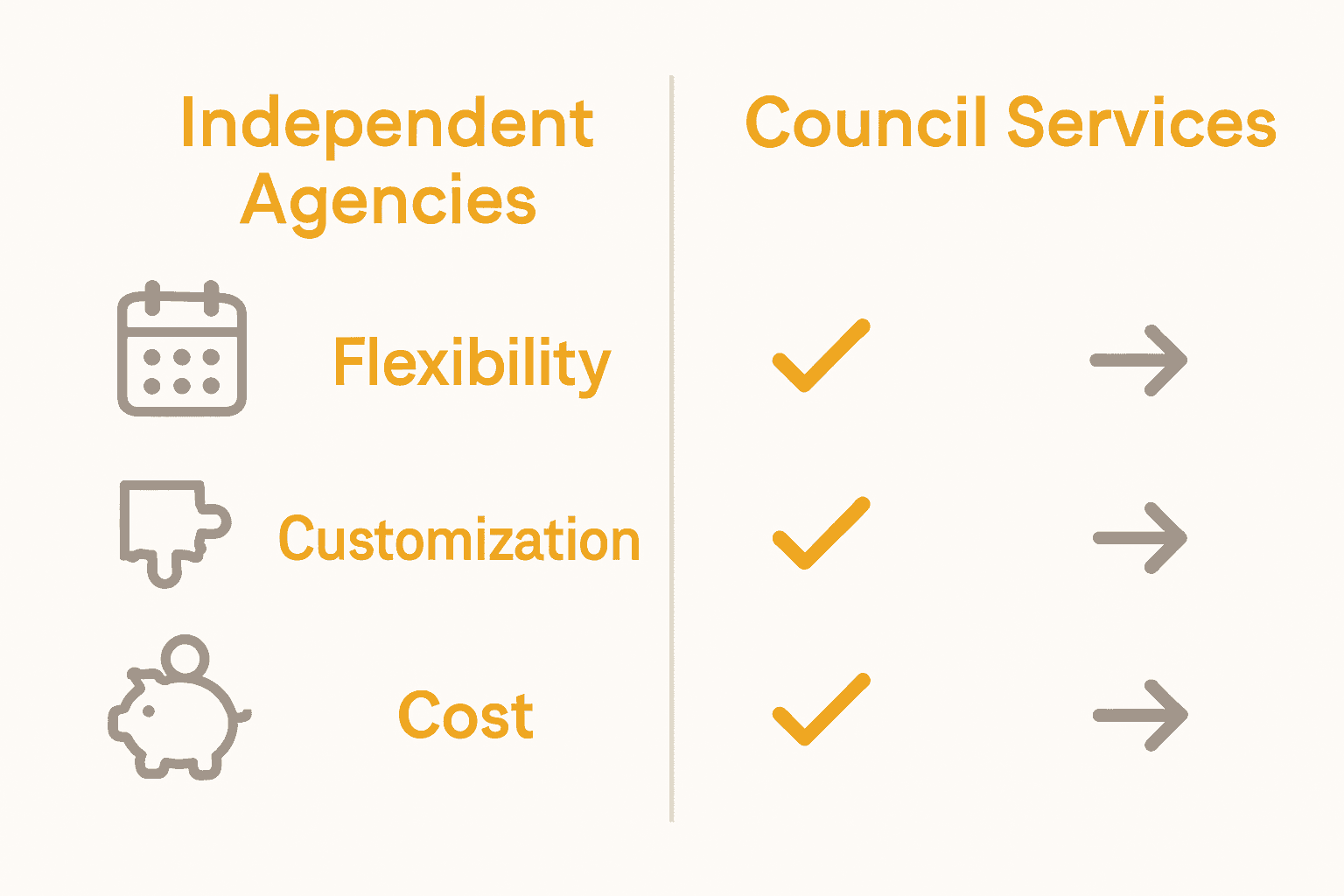
Cost-Effectiveness | Independent providers often present more economical care solutions compared to traditional council-run services, which can be more rigid and expensive. |
Independent Care Agencies Explained Simply
Independent care agencies are specialised organisations that provide personalised care and support services directly to individuals within their own homes. According to Independent Age, these agencies offer a comprehensive range of services designed to help vulnerable people maintain their independence and quality of life.
These agencies operate separately from local authorities and the NHS, giving them flexibility to create tailored care packages that meet individual needs. As research from the Institute for Fiscal Studies indicates, independent care agencies can be private or voluntary sector organizations that provide essential adult social care services, serving both publicly funded and self-funded clients.
Key services typically provided by independent care agencies include:
Personal care assistance
Medication management
Household task support
Companionship and social engagement
Specialised dementia and disability care
For families seeking personalised home care solutions, understanding why home care agencies matter can help make informed decisions about supporting their loved ones’ wellbeing and independence.
Types of Providers: Independent vs Council Services
In the complex landscape of adult social care, families have two primary options for care services: independent providers and council services. According to research from the Institute for Fiscal Studies, these providers play distinct but interconnected roles in supporting vulnerable individuals across England.
Independent providers, which include private and voluntary organizations, supply the majority of care services. They offer greater flexibility in personalized care packages, allowing families to choose providers that best match their specific needs. Councils, while still significant, often commission care from these independent organizations rather than directly providing all services themselves.

Key differences between independent and council care providers include:
Funding Sources: Independent providers are typically privately funded or mix public and private funding
Flexibility: Independent agencies can create more tailored care packages
Service Range: Independent providers often specialize in specific care needs
Interestingly, the Care Quality Commission has reported variations in service quality, with some council-run services achieving higher ratings. For those navigating these options, understanding the differences between introductory agencies and CQC-registered providers can help make more informed care decisions.
Key Benefits of Choosing Independent Agencies
Independent care agencies offer families a remarkable opportunity to secure personalised and flexible care services that traditional service models cannot match. According to Independent Age, these agencies provide tailored care plans that adapt precisely to individual needs, ensuring that each person receives support that truly reflects their unique circumstances.
The primary advantages of choosing independent agencies extend far beyond standard care provisions. These organizations typically offer more comprehensive and nuanced support, including specialized care for complex conditions, more frequent personal interactions, and a deeper commitment to individual care goals. The flexibility inherent in independent agencies allows for more responsive and adaptive care strategies that can evolve alongside a care recipient’s changing requirements.
Key benefits of independent care agencies include:
Customised Care Plans: Individually tailored support matching specific needs
Flexible Scheduling: Adaptable care hours and service arrangements
Specialised Expertise: Targeted support for specific health conditions
Personalized Matching: Carefully selected carers who align with client personalities
Comprehensive Support: Holistic approach addressing multiple care dimensions
For families considering home care options, understanding why choose independent home care can provide deeper insights into making the most appropriate care decisions for their loved ones.
How Accreditation and Quality Standards Work
Accreditation and quality standards are critical safeguards in the independent care sector, ensuring that vulnerable individuals receive professional, safe, and compassionate support. According to the Care Standards Act 2000, a comprehensive framework was established to regulate and register care services, protecting the fundamental rights and well-being of service users.
The Care Quality Commission (CQC) plays a pivotal role in maintaining these standards, conducting rigorous inspections and assessments of independent care agencies. These evaluations examine multiple dimensions of care delivery, including staff training, safety protocols, personalised care planning, and the overall quality of client interactions. Agencies are rated and must consistently demonstrate their commitment to excellence to maintain their operational status.
Key aspects of accreditation and quality standards include:
Comprehensive Assessments: Detailed evaluations of care practices
Regular Inspections: Ongoing monitoring of service quality
Staff Competency Checks: Verification of professional qualifications
Safety Protocol Verification: Ensuring robust safeguarding measures
Client Feedback Integration: Continuous improvement mechanisms
For families seeking deeper insights into these critical processes, understanding accreditation in home care services can provide valuable context about how independent agencies maintain their high standards of care.
Comparing Costs, Flexibility, and Personalisation
Choosing the right care service involves carefully weighing financial considerations, personalised support, and service adaptability. According to Community Care, government research has consistently demonstrated that independent care providers offer more cost-effective solutions compared to traditional council-run services.
Independent care agencies excel in providing tailored care experiences that adapt precisely to individual needs. Unlike rigid council-based systems, these agencies can create bespoke care packages that flex around a client’s specific requirements, lifestyle preferences, and personal circumstances. This approach means families aren’t locked into standardised service models but can design support that truly reflects their loved one’s unique situation.
Key comparative factors include:
Cost Efficiency: Independent agencies often provide more economical care options
Personalisation Level: Greater ability to customise care plans
Scheduling Flexibility: More adaptable care hour arrangements
Matching Precision: More nuanced carer-client compatibility
Responsive Support: Quicker adaptation to changing care needs
Families seeking comprehensive insights can explore understanding why choose independent home care to make more informed care decisions.
Discover Truly Personalised Care with Chamomile Care
The article highlights how independent care agencies provide flexible, tailored support designed around unique needs. Families often face the challenge of finding compassionate care that adapts as circumstances shift while maintaining high standards and trust. At Chamomile Care, we understand these concerns deeply. With over 40 years of experience and a CQC Outstanding rating, we deliver expert home care services including dementia, Parkinson’s, and medication management that honour your loved one’s individuality and dignity.
Choosing an independent agency means access to customised care plans, flexible scheduling, and deeply committed carers who genuinely connect with clients. Our team embraces these principles every day to ensure vulnerable individuals receive the respect and support they deserve. Learn more about our approach and trusted reputation by visiting our homepage or reading about why choose independent home care for insights closely aligned with the article’s guidance.
Explore how personalised care can transform your family’s experience.
Take the first step towards compassionate, reliable home care with Chamomile Care today. Contact us through our website at https://chamomilecare.com and discover how our accredited services can support your loved one’s independence now.
Frequently Asked Questions
What are independent care agencies?
Independent care agencies are specialized organizations that provide personalized care and support services directly to individuals in their own homes, helping them maintain independence and quality of life.
How do independent care agencies differ from council services?
Independent care agencies typically operate separately from local authorities and the NHS, offering more flexibility in creating tailored care packages, while council services often rely on more standardized approaches.
What benefits do independent care agencies provide?
Independent care agencies offer customized care plans, flexible scheduling, specialized expertise, and a more personal approach, allowing for support that adapts to each individual’s unique circumstances and needs.
How is the quality of care ensured in independent care agencies?
Quality of care in independent agencies is ensured through accreditation and standards set by the Care Quality Commission (CQC), involving comprehensive assessments, regular inspections, staff competency checks, and client feedback integration.
Recommended
Comments