
Understanding Why Private Home Care is Essential

Updated: Nov 1, 2025
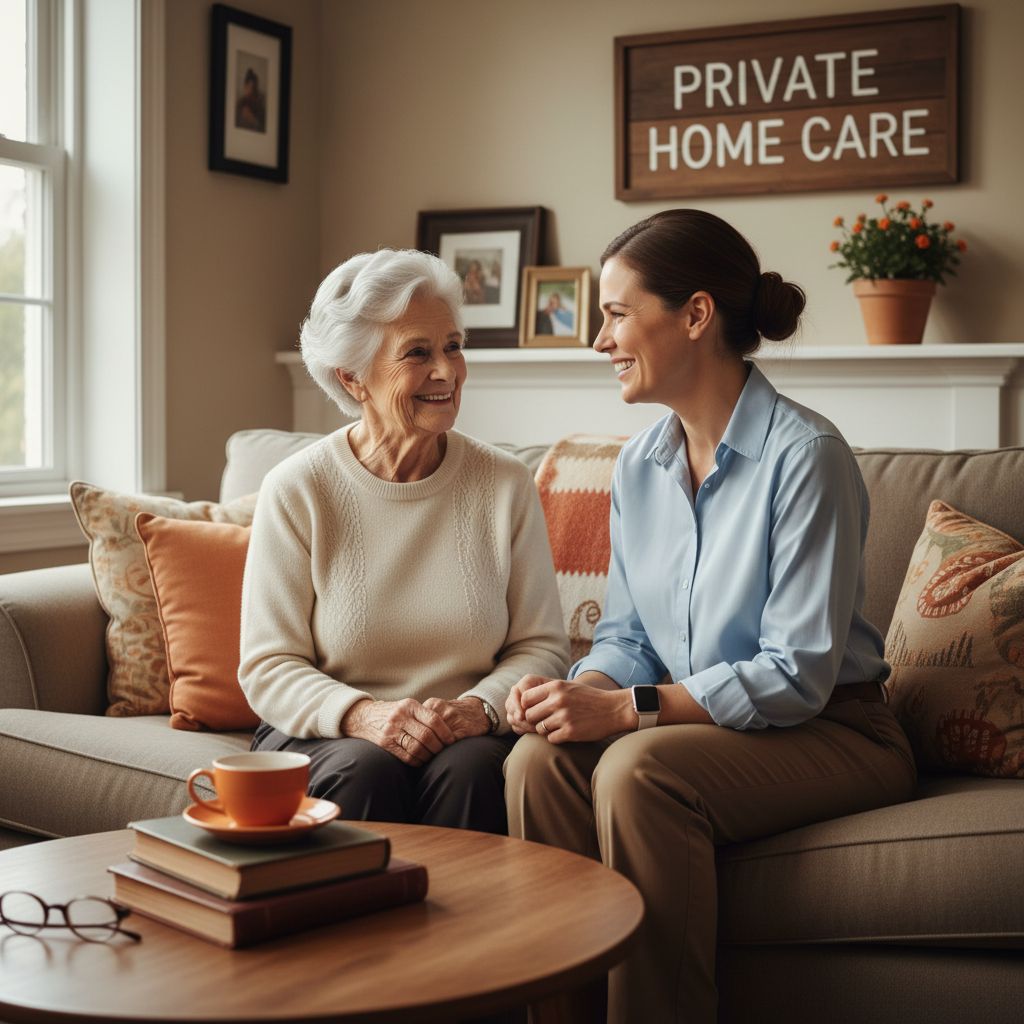
Private home care is changing the way people experience support at home. More than 950,000 older adults in the UK now rely on these services, drawn by the promise of personal well-being and familiar surroundings. Most expect care to focus on medical routines and daily tasks, but the surprising truth is that private home care delivers something far deeper: genuine companionship and dignity, right in your own living room.
Table of Contents
Quick Summary
Takeaway | Explanation |
Personalised care enhances individual dignity | Tailored support in home care respects clients’ unique preferences and promotes their autonomy. |
Home care professionals provide essential emotional support | Caregivers offer not just physical assistance, but emotional engagement and companionship for holistic wellbeing. |
Care planning begins with a thorough assessment | A comprehensive evaluation of an individual’s health and preferences is vital for effective personalised care provision. |
Home care preserves familiarity and independence | Unlike residential care, home care maintains individuals’ comfort by allowing them to stay in their own homes. |
Family involvement is crucial in care decisions | Evaluating social and emotional needs helps families choose the best care options that honour individual dignity and requirements. |
What is Private Home Care and Its Role?
Private home care represents a compassionate, personalised approach to supporting individuals who require assistance while maintaining their independence and dignity within their own living environment. This specialised service focuses on providing professional support directly in a person’s home, allowing them to receive high-quality care tailored to their specific needs and preferences.
Understanding the Core Concept
Private home care involves trained professional caregivers delivering comprehensive support services designed to help individuals with daily living activities. Home care services encompass a wide range of assistance, from personal care and medication management to companionship and practical household tasks.
Key aspects of private home care include:
Personalised support matching individual requirements
Maintaining client independence and quality of life
Professional and compassionate care delivery
Flexible service options adaptable to changing needs
Roles and Responsibilities of Home Care Professionals
Home care professionals play a crucial role in supporting vulnerable individuals. Their responsibilities extend far beyond basic physical assistance, encompassing emotional support, social interaction, and holistic wellbeing management. Read more about our comprehensive home care approach to understand how professional caregivers make a significant difference in clients’ lives.
These dedicated professionals are trained to provide assistance with various essential tasks, including:
Personal hygiene and grooming
Medication administration and monitoring
Meal preparation and nutrition support
Mobility assistance and safe movement
Companionship and emotional engagement
By offering tailored, individualised care within the familiar and comfortable setting of one’s home, private home care services enable individuals to maintain their sense of autonomy while receiving professional, compassionate support.
The following table organises the main roles and responsibilities of home care professionals, summarising their multi-faceted support to clients in a home setting.
Responsibility | Description |
Personal hygiene and grooming | Assistance with bathing, dressing, and personal appearance |
Medication administration | Managing schedules and ensuring correct medication and dosages are taken |
Meal preparation and nutrition | Planning, preparing balanced meals, and supporting dietary needs |
Mobility assistance | Helping with walking, transfers, and safe movement throughout the home |
Companionship and emotional support | Providing conversation, encouragement, and social engagement |
Monitoring wellbeing | Observing changes and reporting concerns to families or supervisors |
Household tasks | Supporting with light cleaning, laundry, and maintaining a safe space |
The Importance of Personalised Care in Home Settings
Personalised home care represents a transformative approach to supporting vulnerable individuals, moving beyond standardised service models to create tailored care experiences that honour individual dignity, preferences, and unique life circumstances.
Understanding Individual Needs and Preferences
Every person has distinct requirements, backgrounds, and personal histories that shape their care needs. Personalised care standards recognise this complexity, ensuring that support goes far beyond basic physical assistance. According to Age UK Research, personalised care approaches can significantly improve an individual’s quality of life and emotional wellbeing.
Key principles of personalised care include:
Recognising each client’s unique life story
Respecting individual cultural and personal preferences
Adapting support strategies to match specific requirements
Promoting client autonomy and self-determination
Holistic Wellbeing Through Tailored Support
Personalised home care transcends traditional medical models by addressing comprehensive wellbeing. Professional caregivers develop nuanced understanding of each client’s physical, emotional, and social needs. This approach allows for creating support plans that are not just functional but genuinely enriching.
Critical elements of holistic personalised care involve:
Comprehensive assessment of individual physical and mental health
Flexible care strategies responsive to changing needs
Emotional support and meaningful social engagement
Preservation of personal identity and independence
By prioritising individual narratives and preferences, personalised home care transforms support from a transactional service into a compassionate, dignified partnership that celebrates each person’s unique journey and potential.

How Private Home Care Works: Key Components
Private home care operates through a sophisticated, client-centred process designed to provide comprehensive and responsive support that meets individual needs with precision and compassion. This systematic approach ensures that care is not just delivered, but carefully tailored to each person’s unique circumstances.
Initial Assessment and Care Planning
Home care planning begins with a thorough, professional assessment of the client’s requirements. Professional care coordinators conduct detailed consultations to understand physical health, emotional wellbeing, personal preferences, and specific support needs. According to NHS Care Guidelines, this initial evaluation forms the foundation for developing a personalised care strategy.
Key components of the assessment process include:
Comprehensive health and mobility evaluation
Discussion of personal care preferences
Understanding family and social support networks
Identifying specific daily living challenges
Implementation and Ongoing Monitoring
Once a care plan is developed, highly trained care professionals are carefully matched to the client. This matching process considers not just professional competence, but also personal compatibility and shared interests. Regular monitoring and periodic reassessments ensure that the care strategy remains responsive to changing needs.
Critical aspects of care implementation involve:
Precise execution of personalised care plans
Regular communication with clients and families
Continuous professional training for caregivers
Flexible adaptation of support strategies
By integrating systematic assessment, personalised planning, and dynamic implementation, private home care creates a supportive environment that prioritises individual dignity, independence, and quality of life.
Comparing Private Home Care to Other Care Options
Choosing the right care approach is a significant decision that impacts an individual’s quality of life, independence, and overall wellbeing. Different care models offer varied levels of support, each with distinct advantages and considerations that families and individuals must carefully evaluate.
Residential Care vs Private Home Care
Residential care facilities and private home care represent two fundamentally different approaches to supporting vulnerable individuals. Home care planning becomes crucial when understanding these differences. According to Age UK Research, each option presents unique benefits and challenges.
Key distinctions between residential and home care include:
Familiarity of environment (home care preserves personal surroundings)
Level of personal autonomy
Cost considerations
Emotional and psychological impact
Flexibility of support services
Comparative Analysis of Care Models
Private home care distinguishes itself through its ability to provide personalised, one-to-one support within the client’s familiar environment. Unlike institutional settings, home care allows individuals to maintain their daily routines, social connections, and sense of personal identity.
Critical comparative factors to consider:
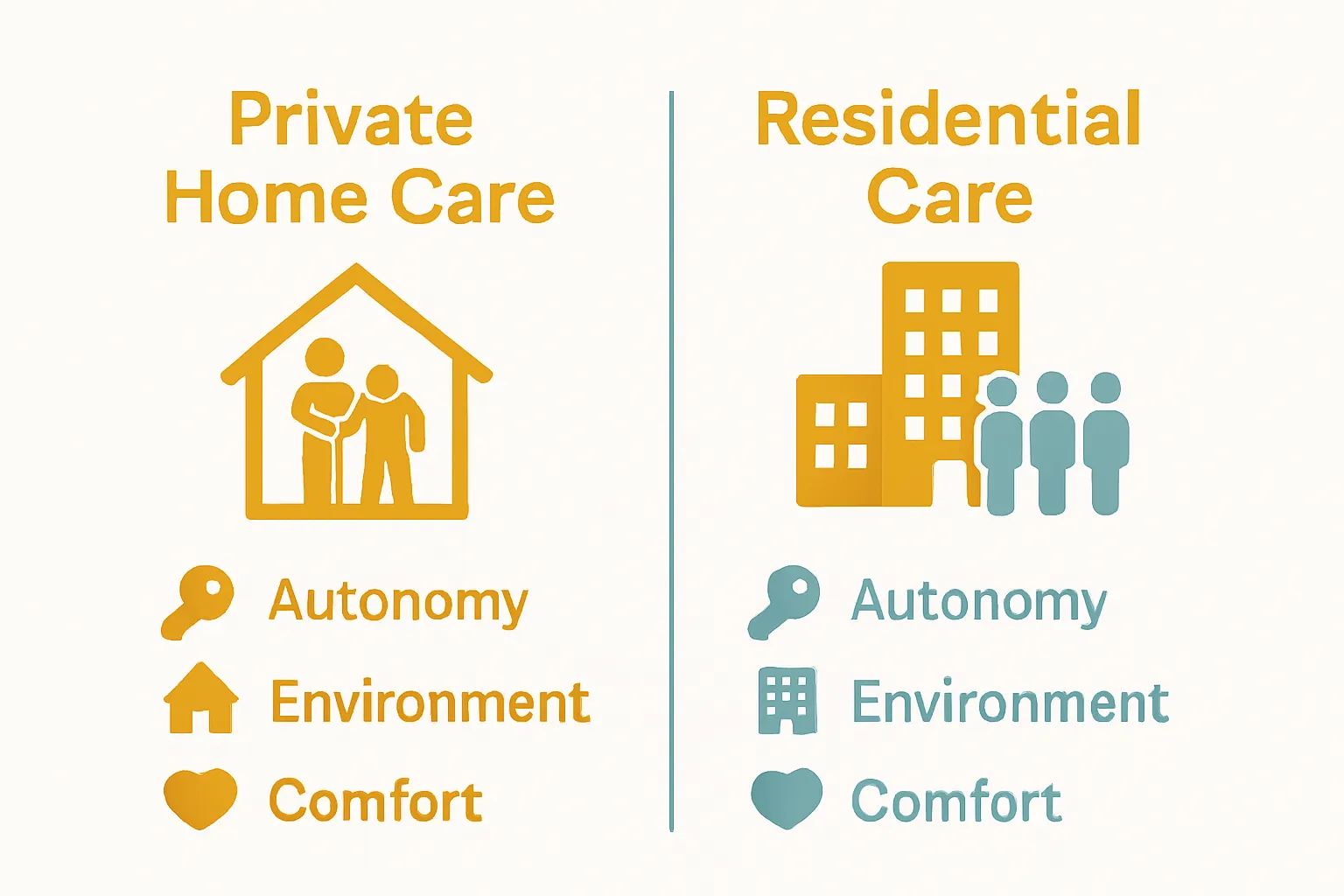
Emotional comfort and psychological wellbeing
Continuity of personal relationships
Customisation of care strategies
Preservation of individual independence
Cost-effectiveness over extended periods
By prioritising individual needs and preferences, private home care offers a more holistic, dignified approach to supporting vulnerable individuals, ensuring they receive professional care while maintaining their sense of self and personal dignity.
To clarify the differences between residential care and private home care, the following table compares their key characteristics as highlighted in the article.
Feature | Private Home Care | Residential Care Facility |
Environment | Client’s own home | Communal living facility |
Personal Autonomy | High – routines and preferences maintained | Lower – routines often standardised |
Emotional Comfort | Familiar surroundings; personalised companionship | Adjustment to new surroundings; less one-to-one |
Flexibility of Support | Highly adaptable to individual needs | More structured; less flexible |
Cost Considerations | Variable, often hourly or per visit | Typically all-inclusive, may be higher overall |
Social Connection | Preserves personal and family relationships | Creates new social environment with residents |
Independence | Strongly promoted | Can be reduced due to communal living |
Factors Influencing the Choice of Private Home Care
Selecting private home care involves a nuanced decision-making process that considers multiple interconnected factors affecting an individual’s quality of life, health management, and personal wellbeing. Families and individuals must carefully evaluate these complex considerations to ensure optimal support.
Health and Personal Care Needs Assessment
Essential home care planning begins with a comprehensive understanding of an individual’s specific health requirements. According to NICE Guidelines, the complexity and progression of medical conditions play a pivotal role in determining appropriate care strategies.
Critical health factors to consider include:
Current medical diagnosis and prognosis
Complexity of medication management
Physical mobility and assistance requirements
Potential for rehabilitation or recovery
Cognitive function and mental health needs
Emotional and Social Considerations
Beyond medical necessities, emotional wellbeing and social connectivity significantly influence home care decisions. The psychological impact of care arrangements can profoundly affect an individual’s overall quality of life. Professional home care must address not just physical needs, but also emotional support and social engagement.
Key emotional and social factors involve:
Maintaining personal independence
Preserving family relationship dynamics
Ensuring consistent social interaction
Supporting mental health and emotional resilience
Minimising feelings of isolation or dependency
By holistically examining medical, emotional, and social dimensions, families can make informed decisions that honour an individual’s dignity, preferences, and unique life circumstances.
Discover Personalised Home Care That Truly Makes a Difference
If you are struggling to find care that respects your loved one’s independence while ensuring safety and comfort at home, you are not alone. The article highlights how private home care plays a crucial role in preserving dignity, offering emotional support, and adapting to evolving personal needs. Many families worry about loss of autonomy and the emotional toll that standardised care can bring. At Chamomile Care, we understand these challenges because we have spent over 40 years helping families in Abingdon and beyond to find the right solution. Our tailored approach is designed to meet your unique requirements by delivering compassionate, CQC Outstanding-rated Caring right in the heart of your own home.
Take the next step towards a safer and more fulfilling daily life for someone you care about. See how our bespoke care plans, professional team, and unwavering dedication set us apart. Visit Chamomile Care to learn more about our rigorous quality standards in home care and explore our compassionate home care planning advice. Arrange your free initial discussion today and experience the confidence that comes from choosing a trusted provider who puts your needs first.
Frequently Asked Questions
What is private home care?
Private home care is a personalised service that provides professional support to individuals in their own homes, helping them maintain independence and dignity while receiving assistance with daily activities.
How do private home care services differ from residential care?
Private home care allows individuals to stay in their familiar environment, preserving personal autonomy and emotional comfort, whereas residential care typically involves living in a communal facility with less personalised attention.
What types of services are included in private home care?
Services can include personal hygiene assistance, medication management, meal preparation, mobility support, and companionship, all tailored to meet the individual’s specific needs.
Why is personalised care important in home settings?
Personalised care respects each individual’s unique circumstances, preferences, and backgrounds, promoting dignity, improving quality of life, and ensuring care plans are tailored to support holistic wellbeing.
Recommended
Comments