
Understanding Why Choose Domiciliary Care for Support

Updated: Nov 2, 2025

Domiciliary care has become a vital option for thousands across Britain who wish to remain comfortable in their own homes. And yet, while many assume home care is aimed only at older adults, the reality goes much further. Around 950,000 people receive home visits for assistance every year in the UK, including individuals recovering from surgery, those with disabilities and families in need of flexible help. This support does not just ease daily routines. It restores independence and dignity in ways that often surprise both care recipients and their loved ones.
Table of Contents
Quick Summary
Takeaway | Explanation |
Domiciliary care promotes independence at home | It enables individuals to receive necessary support while maintaining their autonomy and familiar environment. |
Personalised care enhances quality of life | Tailored support strategies significantly improve emotional wellbeing and dignity for recipients. |
Wide range of services are available | Domiciliary care includes personal hygiene, medication management, companionship, and more to cater to various needs. |
Professional care alleviates family stress | It relieves emotional strain on family members and allows for healthier relationships with loved ones. |
Flexibility in care adapts to individual needs | Domiciliary care can adjust to evolving personal circumstances and health requirements for optimal support. |
Why choose Domiciliary Care and Who Benefits?
Domiciliary care represents a compassionate and personalised approach to supporting individuals who need assistance whilst maintaining their independence within their own home environment. Home care services provide professional support tailored to meet diverse individual needs.
Understanding Domiciliary Care Fundamentals
At its core, domiciliary care involves trained care professionals providing direct support to people in their personal living spaces. This support encompasses a wide range of services designed to help individuals manage daily activities and maintain their quality of life. Whether someone is an older adult, living with a disability, or recovering from an illness, domiciliary care adapts to unique personal requirements.
Key aspects of domiciliary care typically include:
Personal hygiene assistance
Medication management
Meal preparation
Light housekeeping
Companionship and emotional support
Medical monitoring
Who Can Benefit from Domiciliary Care
Domiciliary care serves a diverse range of individuals who require personalised support. Read more about our specialised care services for specific needs. Typical beneficiaries include:
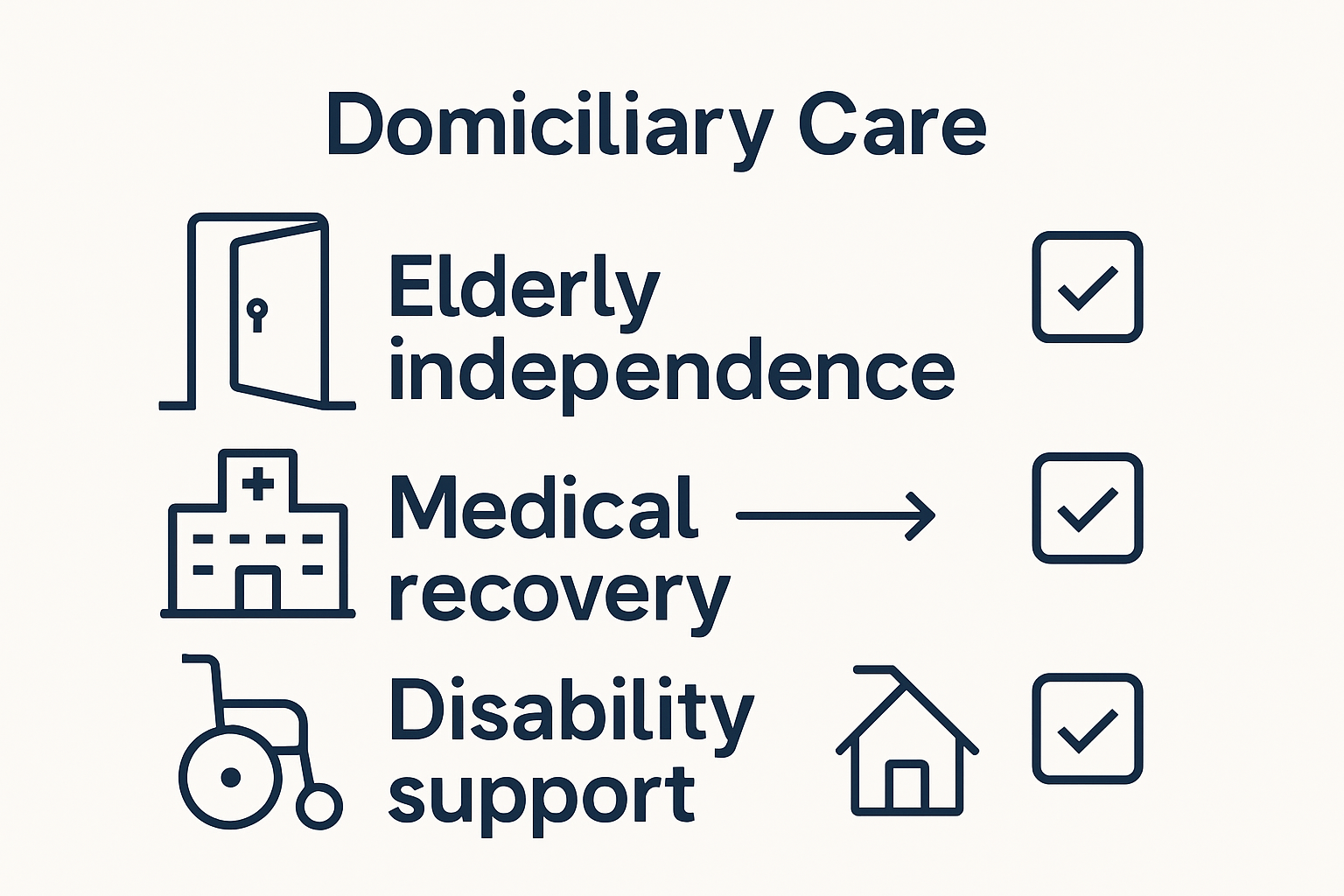
Elderly individuals wanting to maintain independence
People with chronic health conditions
Individuals recovering from surgery or illness
Adults living with physical or cognitive disabilities
Those needing temporary or long-term care support
By offering flexible, compassionate support, domiciliary care enables individuals to receive professional assistance while preserving their dignity, autonomy, and familiar home environment. The goal is not just providing practical help, but ensuring each person receives holistic, personalised care that respects their individual preferences and maintains their sense of self.

The Importance of Personalised Care at Home
Personalised care represents a fundamental approach to supporting individuals with unique needs, ensuring that each person receives tailored support that respects their individual circumstances, preferences, and dignity. According to Age UK Research, personalised care significantly improves overall quality of life and emotional wellbeing.
Understanding Personalised Care Principles
At its essence, personalised care goes beyond standard service delivery. It recognises that every individual has distinct requirements, personal histories, and specific health needs. This approach transforms care from a generic service into a carefully crafted support strategy that adapts to the individual.
Key principles of personalised care include:
Respecting individual autonomy
Recognising unique personal preferences
Providing flexible and responsive support
Maintaining dignity and personal identity
Encouraging active participation in care planning
Benefits of Tailored Home Care Support
Learn more about our personalised care approach, where we understand that every person’s journey is unique. Personalised home care offers numerous advantages that extend beyond basic physical assistance:
Emotional comfort of remaining in familiar surroundings
Preservation of personal independence
Customised support matching individual health requirements
Enhanced mental and emotional wellbeing
Reduced stress for both care recipients and their families
By focusing on individual needs, personalised care transforms the traditional care model into a compassionate, responsive support system that truly values each person’s unique life story and ongoing journey.
Below is a comparison table outlining the key differences between personalised (domiciliary) care and standard care models, as referenced in the article.
Aspect | Personalised (Domiciliary) Care | Standard Care Model |
Approach | Tailored to individual needs and preferences | Generic, one-size-fits-all |
Setting | Provided in the individual’s own home | Often in institutional or facility settings |
Flexibility | Highly adaptable to changing circumstances | Typically fixed routines |
Focus | Respect for dignity, autonomy, and identity | Task-oriented, less focus on personalisation |
Participation in Care Planning | Encourages active involvement | Limited individual input |
Emotional Wellbeing | Prioritises mental and emotional health | May overlook emotional needs |
Relationship with Care Provider | Ongoing, familiar relationship | More transactional or anonymous |
How Domiciliary Care Supports Independence
Domiciliary care plays a crucial role in empowering individuals to maintain their independence and dignity while receiving necessary support. According to NHS Guidelines, home care services are specifically designed to help people continue living in their familiar environments with confidence and autonomy.
Preserving Personal Autonomy
Independence is more than physical mobility it encompasses emotional wellbeing, personal choice, and the ability to make decisions about one’s own life. Domiciliary care professionals understand this fundamental principle, creating support strategies that enhance rather than replace an individual’s capabilities. Discover our approach to supportive care that prioritises personal agency and self-determination.
Key strategies for maintaining independence include:
Encouraging self-management of daily tasks
Providing adaptive equipment and techniques
Offering gentle, non-intrusive assistance
Promoting confidence through skill reinforcement
Respecting personal preferences and routines
Comprehensive Support Mechanisms
Domiciliary care supports independence through multifaceted approaches that address physical, emotional, and practical needs. This holistic method ensures individuals receive precisely the right level of support without undermining their sense of self-sufficiency.
Critical areas of independence support include:
Mobility assistance that promotes safe movement
Medication management enabling personal health control
Social interaction preventing isolation
Personalised care plans that evolve with changing needs
Emotional support that boosts mental resilience
By focusing on individual strengths and potential, domiciliary care transforms support from a passive service into an active partnership that celebrates personal capability and promotes continued growth and self-determination.
Understanding the Range of Services Offered
Domiciliary care encompasses a comprehensive array of support services designed to meet diverse individual needs. NHS Home Care Guidelines highlight the flexible nature of these services, which adapt to each person’s unique circumstances and requirements.
Core Personal Care Services
Personal care forms the fundamental foundation of domiciliary support, addressing essential daily living activities. Explore our comprehensive care options to understand how we tailor support to individual needs. These services extend far beyond basic assistance, focusing on maintaining dignity, comfort, and personal wellbeing.
Key personal care services typically include:
Assistance with bathing and personal hygiene
Dressing and grooming support
Toileting and continence management
Mobility assistance
Skin and wound care management
Comprehensive Home Support Services
Beyond personal care, domiciliary services provide holistic support that addresses broader lifestyle and health requirements. These services ensure individuals can maintain a comfortable, safe, and engaging home environment while receiving professional care.
Additional support services encompass:
Meal preparation and nutrition support
Light housekeeping and home maintenance
Medication administration and management
Companionship and social interaction
Transportation assistance for medical appointments
Emotional and psychological support
By offering a wide spectrum of services, domiciliary care transforms traditional support models, creating flexible, personalised care experiences that respect individual preferences and promote overall quality of life. Each service is carefully designed to enhance independence, comfort, and personal dignity.
This table summarises the main categories of domiciliary care services available to recipients, allowing you to see at a glance the scope of support on offer.
Service Category | Typical Support Provided |
Personal Care | Bathing, grooming, dressing, toileting, hygiene, skin/wound care |
Mobility Assistance | Support with movement, transfers, safe navigation around the home |
Medication Management | Reminders, administration, and monitoring of medications |
Meal Preparation & Nutrition | Cooking, assistance with eating, dietary support |
Housekeeping & Maintenance | Cleaning, laundry, light household tasks |
Companionship & Social Support | Conversation, emotional support, social engagement |
Transportation Assistance | Help with attending medical appointments or errands |
Emotional & Psychological Care | Support for mental resilience, alleviating stress |
Real-Life Impact of Domiciliary Care on Families
Domiciliary care significantly transforms family dynamics by providing professional support that alleviates emotional and practical challenges associated with caregiving. Parliamentary Research highlights how home care services reduce familial stress and create more balanced care environments.
Emotional and Psychological Relief
Family members often experience significant emotional strain when supporting loved ones with complex care needs. Learn more about home care planning to understand how professional support can transform family relationships. Domiciliary care provides crucial emotional respite, allowing families to shift from exhaustive caregiving to meaningful personal interactions.
Key emotional benefits include:
Reducing caregiver burnout
Restoring healthy family relationships
Alleviating guilt and emotional overwhelm
Creating space for quality time together
Supporting mental health of family members
Practical Family Support Mechanisms
Beyond emotional relief, domiciliary care offers tangible practical support that restructures family caregiving dynamics. Professional carers provide specialised assistance, enabling family members to maintain their professional careers, personal lives, and individual wellbeing while ensuring their loved ones receive expert care.
Practical advantages for families encompass:
Maintaining professional work commitments
Reducing financial strain of full-time caregiving
Accessing professional medical expertise
Creating predictable care schedules
Ensuring consistent, high-quality support
By integrating professional domiciliary care, families can transform challenging care situations into opportunities for compassionate, balanced support that honours both the care recipient’s needs and the family’s overall wellbeing.
Discover Peace of Mind with Domiciliary Care You Can Trust
Choosing domiciliary care is about far more than simply finding help at home. It is a decision that touches on your loved one’s dignity, independence and quality of life. Many families feel overwhelmed by daily care responsibilities. You may worry about finding professionals who value personal choice and maintain high standards. At Chamomile Care we understand these concerns and have built our reputation on delivering truly personalised support based on over 40 years of experience.
If you want compassionate care that adapts to your family’s changing needs, now is the time to take action. Visit our website to see how our dedicated team and recognised personal care services can help relieve your worries. Reach out today so you can give your loved one the outstanding home care support they deserve from a team you can trust.
Frequently Asked Questions
What is domiciliary care?
Domiciliary care is a personalised service where trained professionals provide support to individuals in their own homes. This can include assistance with daily activities like personal hygiene, meal preparation, medication management, and companionship.
Who can benefit from domiciliary care services?
Domiciliary care is beneficial for a wide range of individuals, including elderly people wanting to maintain their independence, those with chronic health conditions, individuals recovering from surgery, or adults living with disabilities.
How does domiciliary care support independence?
Domiciliary care supports independence by enabling individuals to manage daily tasks with professional assistance tailored to their needs. This approach fosters personal autonomy and respect for individual preferences, helping people maintain their dignity while receiving support.
What types of services are included in domiciliary care?
Domiciliary care services include personal care, mobility assistance, meal preparation, light housekeeping, medication management, companionship, and emotional support, all designed to enhance the quality of life for care recipients.
Recommended
Comments