
Understanding What is Personal Care Support for Families

Updated: Oct 27, 2025

Personal care support is often viewed as a simple helping hand with daily tasks at home, yet its true reach is far deeper. Picture this: personalised home care can greatly reduce feelings of isolation and boost mental health, as highlighted by recent research. The real surprise is that the greatest benefit is not in the tasks completed but in how this support restores dignity, confidence, and a sense of belonging to those who need it most.
Table of Contents
Quick Summary
Takeaway | Explanation |
Personal care support affirms dignity and autonomy. | This support facilitates independence by respecting individual preferences and promoting self-worth in daily activities. |
Holistic care enhances emotional and physical wellbeing. | Addressing both emotional and physical needs leads to improved overall health and reduces feelings of isolation. |
Individualised care plans are essential for effectiveness. | Tailored support strategies ensure that services meet each person’s unique requirements and circumstances. |
Personal care workers bridge communication gaps. | They are key in connecting individuals, families, and healthcare systems, enhancing overall care coordination. |
Choosing local services requires thorough research. | A careful evaluation of local options ensures families find the most suitable and flexible personal care support available. |
Defining Personal Care Support: Core Concepts Explained
Personal care support represents a comprehensive and compassionate approach to helping individuals maintain dignity, independence, and quality of life when facing physical, cognitive, or age-related challenges. Personal care services encompass much more than basic physical assistance.
Understanding Personal Care Support Fundamentals
At its core, personal care support involves providing individualised assistance with daily living activities that might become difficult for people due to age, disability, illness, or medical conditions. These activities can range from essential personal hygiene tasks to more complex emotional and practical support needs.
The primary goal of personal care support is not merely to complete tasks, but to empower individuals to maintain their sense of autonomy and self-respect. According to the NHS personalised care framework, this approach focuses on what matters most to the individual, creating support plans that reflect their unique preferences, strengths, and life circumstances.
Key Elements of Effective Personal Care Support
Effective personal care support is characterised by several critical components:
Individualised Care Planning: Developing tailored support strategies
Respect for Personal Dignity: Maintaining the individual’s sense of self-worth
Comprehensive Holistic Assessment: Understanding physical, emotional, and social needs
Professional care providers work closely with individuals and their families to design support strategies that adapt to changing requirements. This might involve assistance with personal grooming, medication management, mobility support, meal preparation, or companionship.
The ultimate objective is creating an environment where individuals feel supported, respected, and empowered to live their lives as independently as possible, with compassionate professional assistance seamlessly integrated into their daily routines.
The Importance of Personal Care Support in Home Care
Personal care support within home care environments represents a crucial intervention that extends far beyond basic physical assistance. It is a multifaceted approach designed to enhance quality of life, promote independence, and provide comprehensive support for individuals facing health challenges. Understanding why home care agencies matter helps families recognise the true value of professional care services.
Addressing Holistic Wellbeing
Home care personal support focuses on nurturing an individual’s physical, emotional, and psychological needs simultaneously. This holistic approach means that care is not merely about completing tasks, but about creating meaningful connections and maintaining the person’s sense of dignity and self-worth.
According to research from the National Care Forum, personalised home care support can significantly reduce feelings of isolation and improve overall mental health for vulnerable individuals. The emotional support provided through consistent, compassionate care creates a sense of security and belonging that is essential for psychological wellbeing.
Critical Benefits of Personal Care Support
The significance of personal care support in home care settings can be understood through several key advantages:
Maintaining Individual Autonomy: Enabling individuals to retain control over their daily lives
Preventing Social Isolation: Providing regular human interaction and companionship
Comprehensive Health Monitoring: Identifying potential health risks early through consistent professional observation
Professional carers become more than service providers they transform into trusted companions who understand an individual’s unique requirements, preferences, and personal history. This approach ensures that care is not a standardised process, but a personalised experience that respects the individual’s identity and wishes.
Ultimately, personal care support in home care settings represents a compassionate commitment to preserving human dignity, promoting independence, and supporting individuals through their most vulnerable moments with respect, expertise, and genuine empathy.
Key Services Offered in Personal Care Support
Personal care support encompasses a wide range of specialised services designed to meet the diverse needs of individuals requiring assistance in their daily lives. Essential home care planning tips can help families understand the comprehensive nature of these crucial support services.
Core Personal Care Service Categories
The spectrum of personal care services extends far beyond basic physical assistance, offering holistic support that addresses multiple aspects of an individual’s wellbeing. Professional care providers develop comprehensive support strategies tailored to each person’s unique requirements, ensuring dignity, independence, and quality of life.
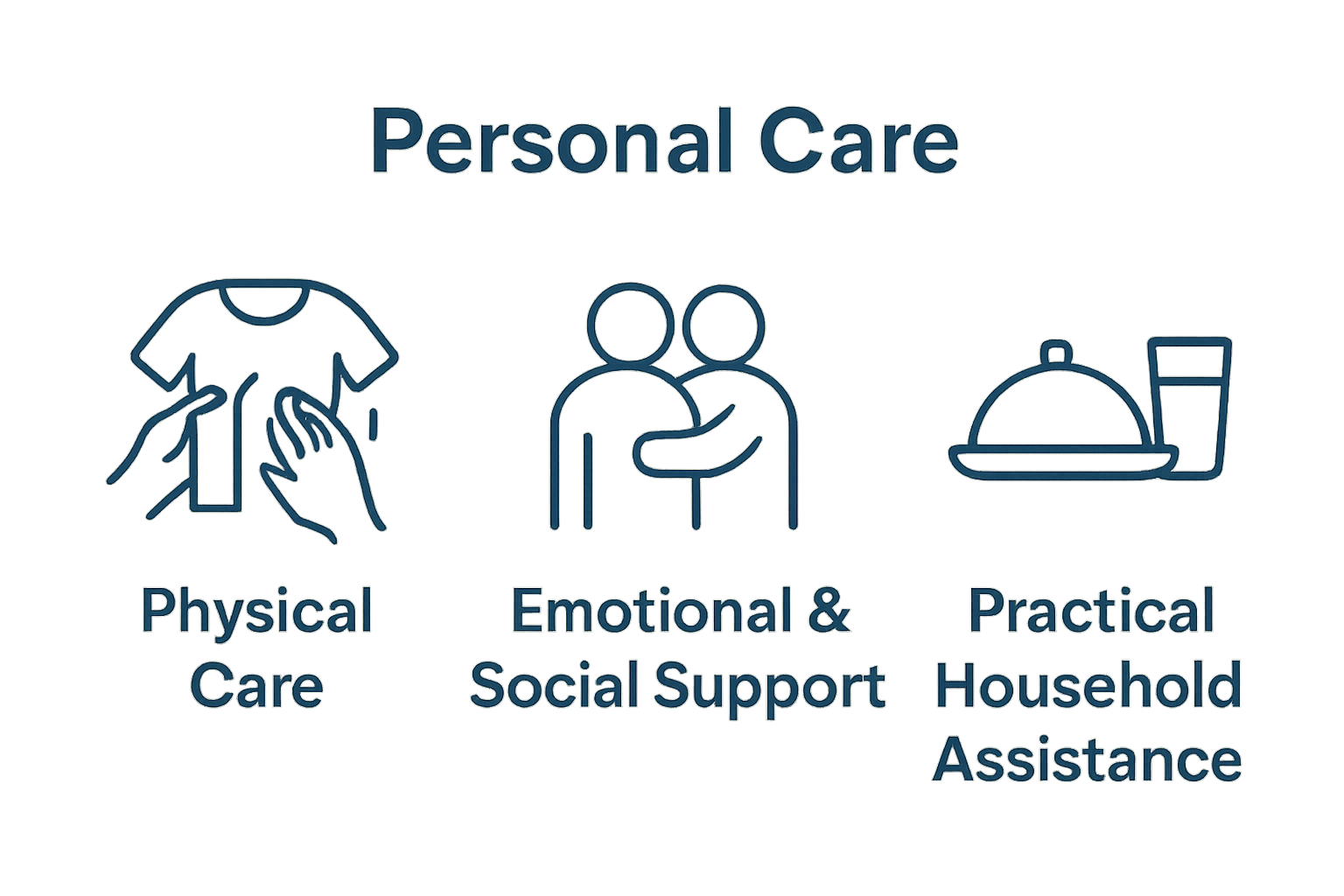
According to research from the Care Quality Commission, effective personal care support typically includes several interconnected service domains that work together to provide comprehensive care.
Detailed Service Offerings
Personal care support services generally encompass several critical areas of assistance:
Physical Care Support: Assistance with personal hygiene, mobility, dressing, eating, and medication management
Emotional and Social Support: Companionship, mental health monitoring, and social engagement activities
Practical Household Assistance: Meal preparation, light housekeeping, shopping, and transportation support
These services are carefully designed to be flexible and adaptive, recognising that each individual’s needs are unique. Professional carers are trained to provide personalised support that respects the individual’s preferences, cultural background, and personal dignity.
Additionally, modern personal care support integrates advanced approaches such as technology-enabled care, regular health monitoring, and proactive communication with healthcare professionals.
The following table organises the principal categories of personal care support services described in the article, providing examples and their significance for individuals receiving care.
Service Category | Examples | Significance |
Physical Care Support | Assistance with hygiene, mobility, dressing, medication | Maintains health, comfort, and dignity |
Emotional and Social Support | Companionship, mental health monitoring, social engagement | Reduces isolation, improves psychological wellbeing |
Practical Household Assistance | Meal preparation, housekeeping, shopping, transport | Promotes independence and a safe living environment |
Health Monitoring | Regular observation, reporting changes to professionals | Enables early intervention, supports long-term wellbeing |
Technology-Enabled Care | Care coordination tools, communication with healthcare | Enhances efficiency and integrates care provision |
Understanding the Role of Personal Care Workers
Personal care workers represent a critical component of supportive healthcare, providing compassionate and professional assistance to individuals who require daily living support. Their role extends far beyond simple task completion, embodying a holistic approach to individual care and wellbeing. Essential home care planning tips can help families appreciate the nuanced responsibilities these professionals undertake.
Professional Responsibilities and Skill Sets
The role of personal care workers is multifaceted and demands a sophisticated blend of practical skills, emotional intelligence, and professional expertise. These dedicated professionals are trained to provide comprehensive support that addresses both physical and emotional needs, ensuring individuals maintain their dignity and independence.
According to guidance from the UK Care Quality Commission, personal care workers must demonstrate exceptional interpersonal skills, adaptability, and a deep understanding of individual care requirements.
Core Competencies and Ethical Considerations
Personal care workers are expected to excel in several critical areas:
Physical Care Assistance: Supporting personal hygiene, mobility, medication management
Emotional Support: Providing companionship, active listening, mental health awareness
Professional Communication: Coordinating with healthcare professionals, documenting care plans
Their work requires a delicate balance of professional boundaries and genuine compassion. They must respect individual privacy, cultural differences, and personal preferences while delivering high-quality, personalised care.
Moreover, personal care workers serve as vital communication bridges between care recipients, their families, and broader healthcare systems.
This table summarises the essential core competencies and ethical considerations required for effective personal care work, as outlined in the article.
Core Competency | Description |
Physical Care Assistance | Providing help with hygiene, mobility, medication, and daily physical needs |
Emotional Support | Offering companionship, empathy, and mental health awareness |
Professional Communication | Liaising with healthcare professionals and maintaining accurate care records |
Respect for Individual Dignity | Upholding privacy, personal preferences, and cultural values |
Adaptability and Flexibility | Responding to changing requirements and care contexts |
Ethical Conduct | Observing boundaries while delivering compassionate, high-quality care |

Navigating Personal Care Support Options Locally
Finding appropriate personal care support in your local area requires strategic planning, comprehensive research, and understanding of available resources. Essential home care planning tips can provide families with crucial guidance during this complex decision making process.
Understanding Local Care Assessment Processes
The journey towards securing personal care support begins with a comprehensive needs assessment, which serves as a critical first step in identifying appropriate services. Local authorities conduct these assessments to determine an individual’s specific requirements, ensuring that support strategies are precisely tailored to their unique circumstances.
According to NHS guidance on social care services, families should anticipate a detailed evaluation that considers physical, emotional, and practical support needs.
Key Considerations in Local Care Support Selection
When exploring local personal care support options, families should focus on several critical factors:
Comprehensive Service Range: Evaluating providers offering holistic care solutions
Professional Qualifications: Verifying staff training and accreditation standards
Personalisation Capabilities: Assessing flexibility in adapting support to individual requirements
Local care support options typically include home care agencies, direct payments, community support services, and independent living programmes. Each option presents unique advantages, and families must carefully consider their specific circumstances, budget constraints, and the care recipient’s preferences.
Successful navigation of local personal care support requires proactive communication, thorough research, and a willingness to explore multiple potential solutions. By understanding available resources and maintaining an open dialogue with healthcare professionals, families can develop comprehensive care strategies that prioritise dignity, independence, and quality of life.
Discover Personal Care Support That Puts Your Family First
Are you feeling the weight of choosing the right support for a loved one who needs help with daily living? The article highlights how crucial it is to find personalised, dignified care that respects individuality and maintains independence. Many families struggle with uncertainty, seeking professional guidance, and reassurance that their loved ones will be safe and valued at home.
At Chamomile Care, you will find a team with more than 40 years of experience, known for delivering outstanding personal care in the Abingdon area. Our CQC ‘Outstanding’ rating and expert support for conditions such as dementia and Parkinson’s set us apart. Real stories and transparent testimonials show how we build trust and provide peace of mind through tailored solutions. Rely on our compassionate specialists to create holistic care plans that recognise your loved one’s individual journey. Visit https://chamomilecare.com today and request a personalised consultation. Make a choice that brings real comfort and security to your family—do not wait to give your loved one the care they truly deserve.
Frequently Asked Questions
What is personal care support?
Personal care support involves providing individualised assistance with daily living activities for individuals facing physical, cognitive, or age-related challenges. This support aims to empower individuals to maintain their dignity and independence.
What types of services are included in personal care support?
Personal care support services generally include physical care assistance (such as help with hygiene and mobility), emotional and social support (like companionship), and practical household assistance (such as meal preparation and light housekeeping).
How does personal care support enhance overall wellbeing?
Personal care support enhances overall wellbeing by addressing physical, emotional, and psychological needs. This holistic approach helps reduce feelings of isolation and ensures individuals feel secure and respected in their daily lives.
What should families consider when choosing personal care support options?
Families should consider the range of services offered, the qualifications and training of care staff, and the ability of the provider to personalise support based on the individual’s unique requirements and preferences.
Recommended
Comments