
Understanding What Is Domiciliary Care for Home Support


Domiciliary care is quietly transforming the way people manage daily life at home and more than 950,000 adults in England already rely on this support every year. Most people think professional care means losing independence or privacy. In reality, domiciliary care is about boosting autonomy and dignity right where it matters most, helping people to stay in the comfort of their own homes whilst receiving truly personalised support.
Table of Contents
Quick Summary
Takeaway | Explanation |
Domiciliary care promotes independence at home. | This service allows individuals to live comfortably while receiving necessary support in their familiar environment. |
Personalised care plans adapt to individual needs. | Care is tailored through assessments, that consider health, emotional, and social support requirements. |
Family and friends involvement is crucial in care strategies. | Active participation of family members and friends, enhances the care experience and ensures better health outcomes for the individual. |
Services address physical and emotional well-being. | Comprehensive support includes personal care, companionship, and emotional assistance, promoting holistic wellbeing. |
Domiciliary care reduces the reliance on institutional settings. | By maintaining independence for individuals, community resources are used more effectively, relieving pressure on hospitals and care facilities. |
What Is Domiciliary Care and Who It Supports
Domiciliary care represents a specialised form of support designed to help individuals maintain their independence and quality of life within the comfort of their own homes. As defined by NHS guidance, this personalised care service assists people who require additional help to manage daily living activities.
Understanding the Core Purpose
The fundamental goal of domiciliary care is to provide comprehensive support tailored to an individual’s specific needs. This approach enables people with various challenges to continue living safely and comfortably in their familiar environment. Support can range from basic assistance with personal care and household tasks to more complex medical and emotional support.
Key individuals who typically benefit from domiciliary care include:
Elderly individuals experiencing reduced mobility
People living with chronic health conditions
Individuals recovering from surgery or managing long-term disabilities
Those managing progressive conditions like Parkinson’s or dementia
Comprehensive Care Approach
Domiciliary care goes beyond simple task completion. Experts from the Social Care Institute for Excellence emphasise that effective home care involves holistic support addressing physical, emotional, and social needs. Trained care professionals work closely with clients and their families to develop personalised care plans that respect individual preferences, maintain dignity, and promote maximum independence.
For those interested in learning more about how home care agencies support families, our guide provides deeper insights into personalised care strategies. The comprehensive nature of domiciliary care ensures that each individual receives targeted support aligned with their unique circumstances and wellness goals.
The Importance of Domiciliary Care in Communities
Domiciliary care plays a critical role in supporting community health and social infrastructure, offering far more than individual care services. According to research by Age UK, this essential service helps maintain community cohesion, individual dignity, and societal well-being.
Supporting Social Infrastructure
Beyond personal care, domiciliary care services contribute significantly to broader community resilience. By enabling individuals to remain in their familiar environments, these services reduce the pressure on institutional care facilities and hospital systems.
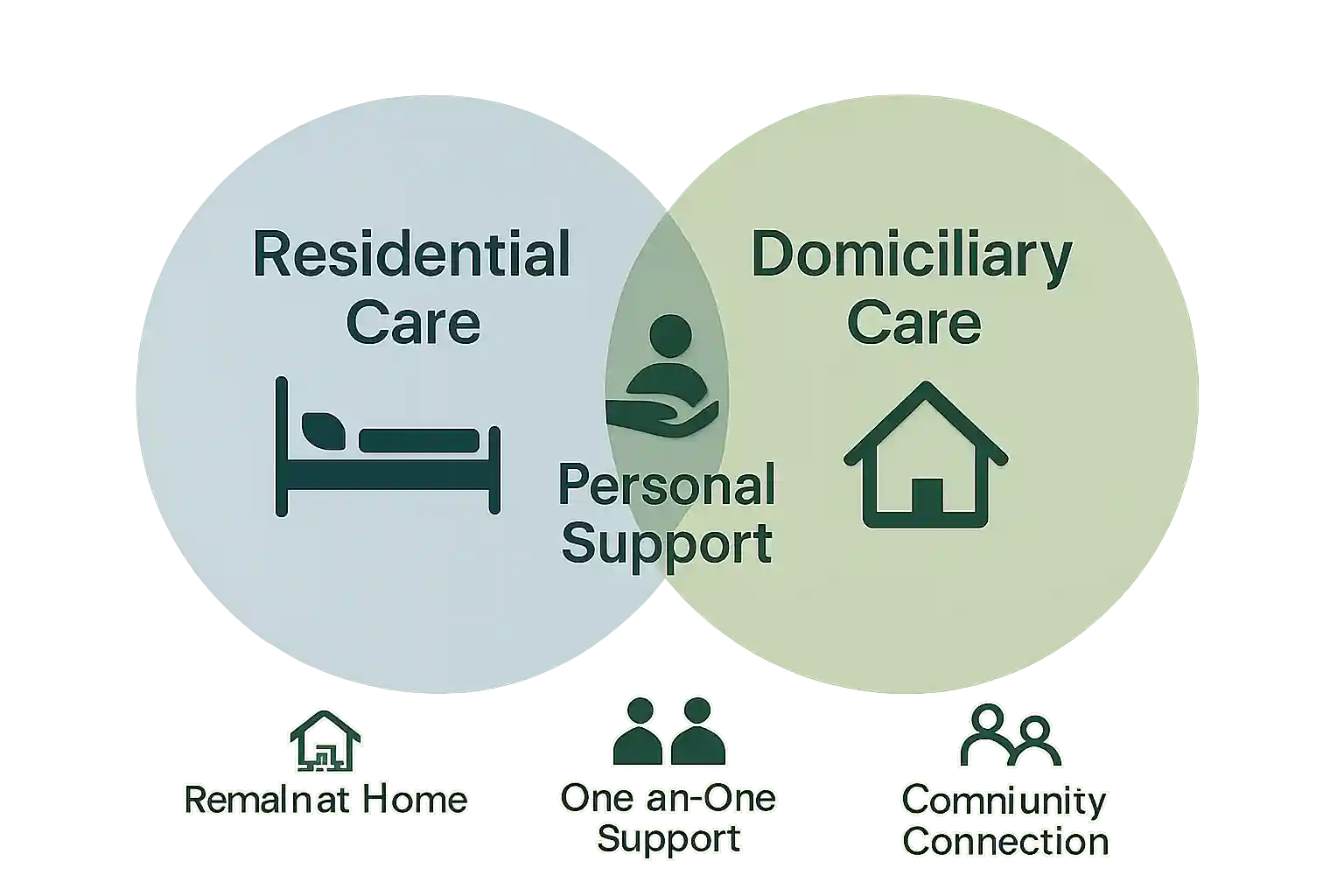
This approach not only preserves individual autonomy but also helps manage healthcare resources more effectively.
Key community benefits include:
Reducing isolation among vulnerable populations
Supporting family caregivers by providing professional assistance
Enabling more efficient use of healthcare resources
Maintaining social connections for individuals with limited mobility
Economic and Social Value
The King’s Fund research highlights that domiciliary care represents a crucial economic mechanism for supporting an ageing population. Professional care services create employment opportunities, support family members who might otherwise need to reduce work commitments, and help maintain individuals’ quality of life at a fraction of the cost of residential care.
Our comprehensive guide explores quality standards in home care services to ensure communities receive the highest standard of professional support. By investing in robust domiciliary care systems, communities can create more inclusive, supportive environments that respect individual needs while maintaining social cohesion and economic efficiency.
How Domiciliary Care Works: Key Features and Services
According to Age UK care guidelines, domiciliary care involves a structured and personalised approach to supporting individuals within their own homes. This comprehensive service encompasses a wide range of support mechanisms designed to address diverse care requirements while maintaining individual dignity and independence.
Personalised Care Assessment
Before commencing care, professional care providers conduct detailed initial assessments to understand an individual’s specific needs, preferences, and lifestyle. These comprehensive evaluations consider physical health, emotional well being, mobility levels, and personal support requirements. The assessment forms the foundation for developing a tailored care plan that evolves with the client’s changing circumstances.
Typical assessment areas include:
Medical history and current health conditions
Personal care and mobility requirements
Emotional and social support needs
Dietary and nutritional considerations
Home environment and safety requirements
Range of Supportive Services
Domiciliary care services extend well beyond basic physical assistance. Experts from the Social Care Institute for Excellence highlight that effective home care involves holistic support addressing multiple dimensions of an individual’s life. Services can include personal care, medication management, meal preparation, light housekeeping, companionship, and emotional support.
Our guide offers essential home care planning tips to help families navigate the complexities of selecting appropriate care services. Professional care workers are trained to provide compassionate, respectful assistance that promotes independence while ensuring safety and quality of life.
The following table summarises the main features and services typically provided by domiciliary care, helping readers quickly compare the range of support available through this home-based service.
Feature or Service | Description |
Personalised Care Plans | Tailored support strategies based on individual needs |
Personal Care | Assistance with bathing, dressing, grooming, and hygiene |
Medication Management | Ensuring correct dosages and adherence to prescriptions |
Meal Preparation | Cooking and serving meals suited to dietary requirements |
Light Housekeeping | Help with laundry, cleaning, and maintaining the household |
Companionship | Social interaction and emotional support |
Mobility Support | Assistance with moving safely around the home |
Emotional and Social Support | Addressing mental well-being and maintaining social links |

Understanding the Roles of Care Workers and Family Involvement
Research from the National Care Forum demonstrates that successful domiciliary care depends on collaborative relationships between professional care workers, care recipients, and their families. This intricate dynamic requires clear communication, mutual respect, and shared commitment to maintaining individual dignity and quality of life.
Professional Care Worker Responsibilities
Care workers are highly trained professionals who provide comprehensive support extending far beyond basic task completion. Their role encompasses physical assistance, emotional support, and active advocacy for the care recipient’s well-being. Professionally trained care workers are equipped with specialised skills to address complex care needs while maintaining sensitivity and respect.
Key professional responsibilities include:
Delivering personalised care according to individual care plans
Monitoring health and reporting changes to healthcare professionals
Providing emotional support and companionship
Maintaining detailed and accurate care records
Ensuring client safety and promoting independence
Family Collaboration and Support
Carers UK research highlights the critical importance of family involvement in domiciliary care. Families are not passive observers but active partners in developing and implementing care strategies. This collaborative approach ensures continuity of care, promotes better health outcomes, and provides emotional reassurance for both care recipients and their loved ones.
Our guide on understanding dementia care offers deeper insights into how families can effectively support their loved ones through professional care services. By maintaining open communication, sharing critical information, and working closely with care professionals, families can create a supportive, compassionate care environment that respects individual needs and preserves personal dignity.
This table provides a clear comparison of the roles and responsibilities of professional care workers versus the involvement of family members in domiciliary care, clarifying how each contributes to an effective support environment.
Role | Key Responsibilities |
Professional Care Workers | Deliver personalised care, monitor health, provide companionship, ensure safety |
Family Members | Collaborate with care teams, share information, offer emotional support, oversee continuity |
Real-Life Benefits and Considerations of Domiciliary Care
According to Age UK research, domiciliary care represents a nuanced approach to supporting individuals with diverse care needs while preserving their independence and personal dignity. Understanding the practical implications of home care requires a comprehensive examination of both its significant advantages and potential challenges.
Tangible Personal Benefits
Domiciliary care offers profound personal advantages that extend beyond basic physical support. By enabling individuals to remain in their familiar environments, these services provide a sense of continuity, comfort, and psychological well-being. Personalised care plans can be dynamically adjusted to meet evolving health requirements, ensuring that support remains precisely tailored to individual needs.
Key personal benefits include:
Maintaining independence and personal autonomy
Receiving individualised, one-on-one care
Staying connected with familiar surroundings and community
Reducing stress and anxiety associated with institutional care
Promoting faster recovery and better mental health outcomes
Practical Considerations and Potential Challenges
Research from the Social Care Institute for Excellence highlights that while domiciliary care offers numerous advantages, families and care recipients must also navigate potential complexities. These might include managing care worker transitions, ensuring consistent quality of care, and addressing potential emotional challenges associated with receiving support at home.
Our comprehensive guide to home care planning provides detailed strategies for addressing these considerations. By approaching domiciliary care with informed preparation, clear communication, and realistic expectations, families can create a supportive, effective care environment that genuinely enhances quality of life.
Experience Outstanding Domiciliary Care with Chamomile Care
If you are feeling overwhelmed by the complexities of arranging reliable domiciliary care, you are not alone. The article highlights how important it is to preserve independence and dignity at home, and recognises the struggle to find specialists who really understand unique conditions such as dementia or physical disabilities. Many families also worry about the safety, continuity, and personalisation of care. Chamomile Care’s accredited, person-centred approach is designed to resolve these worries, whether you are seeking trusted support after a hospital stay or ongoing help with daily activities. With over 40 years of expertise and a CQC ‘Outstanding’ rating, we ensure every care plan reflects the values of compassion, respect, and professionalism discussed in the article.

Take the next step today and give your loved one the quality of life and reassurance they deserve. Explore our homepage to discover more about our tailored care services, our commitment to quality standards, and how our experienced team can partner with your family. Do not wait to transform home support into a positive experience. Contact us or arrange a visit and see why so many in Abingdon trust Chamomile Care with their care needs.
Frequently Asked Questions
What is domiciliary care?
Domiciliary care is a specialised support service that helps individuals maintain their independence and quality of life while living at home. It provides assistance with daily living activities tailored to the individual’s needs.
Who typically benefits from domiciliary care?
Elderly individuals, people with chronic health conditions, those recovering from surgery, and individuals managing progressive conditions like dementia or Parkinson’s often benefit from domiciliary care.
How does the assessment process for domiciliary care work?
Before starting care, professional providers conduct a detailed assessment of the individual’s specific needs, taking into account their health, mobility, emotional support requirements, and home safety, which then informs a personalised care plan.
What types of services are included in domiciliary care?
Domiciliary care services may include personal care, medication management, meal preparation, light housekeeping, companionship, and emotional support, all tailored to promote the individual’s independence and well-being.
Recommended
Comments