
Step by Step Home Care Process for Families in Oxfordshire


Most British families want their loved ones to feel safe, valued, and supported at home, yet only about 14 percent of older adults receive the level of personalised care they truly need. Planning home care can feel complicated with so many options and unique health challenges. By following a clear, step-by-step approach, you can make informed choices that deliver comfort, dignity, and peace of mind for everyone involved.
Table of Contents
Quick Summary
Key Point | Explanation |
1. Thorough Assessments Are Essential | Detailed evaluations identify specific care needs, ensuring tailored support for physical, emotional, and social wellbeing. |
2. Personalised Care Plans Are Crucial | Collaborative planning leads to comprehensive strategies that address individual preferences and needs, enhancing quality of life. |
3. Select Qualified Care Staff | Care staff should be rigorously vetted for skills and emotional intelligence, ensuring a supportive environment for the care recipient. |
4. Consistent Monitoring Is Necessary | Regular check-ins and documentation of care delivery help to address emerging issues and adapt support as needed. |
5. Regular Reviews Improve Care | Structured evaluations enable adjustments based on changing conditions, ensuring high-quality, relevant care continues over time. |
Step 1: Assess individual care needs thoroughly
Assessing individual care needs is a foundational process that helps determine the right level of personalised support for your loved one. This critical first step involves gathering comprehensive information about their health, daily living capabilities, and specific challenges.
To begin, schedule a detailed consultation with healthcare professionals who can provide an objective assessment of care requirements. The Oxfordshire County Council recommends a thorough evaluation that examines an individual’s ability to manage key daily activities such as personal hygiene, mobility, meal preparation, medication management, and social engagement. These assessments help identify specific areas where additional support might be necessary.
During the assessment, expect a healthcare professional to ask detailed questions about medical history, current health conditions, medication regimes, physical limitations, and emotional wellbeing. They will typically observe how your loved one performs everyday tasks and discuss any challenges or difficulties encountered. This holistic approach ensures that the resulting care plan addresses not just physical needs, but also emotional and social requirements.
Additional considerations include understanding any progressive conditions like dementia or Parkinson’s, evaluating current living arrangements, and assessing family support networks. Documentation such as medical reports, current medication lists, and recent hospital discharge summaries can provide valuable context during this assessment.
Here’s a summary of important considerations when assessing individual care needs:
Aspect Assessed | Why It Matters | Potential Outcome |
Physical health | Identifies medical conditions and limitations | Tailored medical or mobility support |
Emotional wellbeing | Recognises mental health challenges | Access to counselling or companionship |
Social engagement | Assesses risk of isolation | Inclusion of social activities |
Home environment | Evaluates safety and accessibility | Home adaptations or equipment |
Family support network | Determines available informal help | Adjusting formal care needed |
Recommendations will emerge from this comprehensive review, potentially including options like part-time home care support, assistive technology, home modifications, or specialised medical equipment to enhance independence and quality of life.
Professional tip: Always approach the assessment with openness and honesty. The more detailed and transparent you are about your loved one’s needs, the more precise and effective the resulting care plan will be.
Step 2: Design a personalised home care plan
Designing a personalised home care plan represents a pivotal moment in ensuring your loved one receives tailored, compassionate support that meets their unique needs and preferences. This crucial step transforms initial assessments into a comprehensive roadmap for care and support.
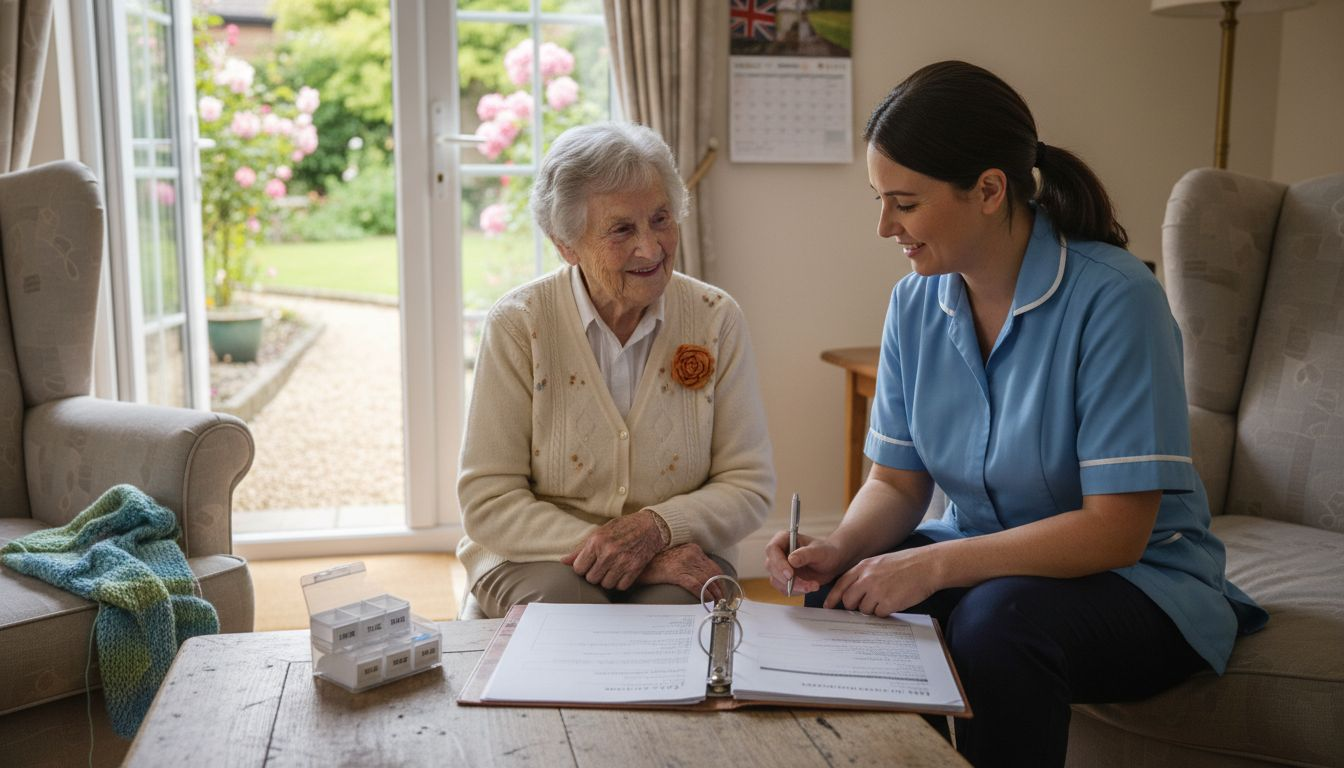
Collaborate closely with healthcare professionals to develop a holistic care strategy that supports rehabilitation and independence. The planning process should encompass multiple dimensions of care, including medical requirements, daily living assistance, emotional support, and personal preferences. Professional teams typically recommend creating a multifaceted plan that addresses physical health, social engagement, medication management, and potential future care scenarios.
Begin by documenting specific care requirements in detail. This includes identifying precise support needs such as mobility assistance, personal hygiene support, medication administration, meal preparation, and social interaction opportunities. Consider incorporating any specialised equipment or home modifications that could enhance independence and safety.
Your care plan should remain flexible and adaptable, recognising that care needs can evolve over time. Regular review meetings with healthcare professionals will help adjust the plan as your loved one’s circumstances change. Comprehensive documentation of care preferences can provide clarity and ensure continuity of care, even if primary caregivers change.
When developing the plan, prioritise the individual’s dignity, personal choices, and quality of life. Involve your loved one in discussions whenever possible, ensuring their voice and preferences are central to the care strategy.
Professional tip: Create a clear, accessible document that outlines the care plan, including emergency contacts, medical information, and specific care instructions, and ensure all family members and caregivers have a copy.
Step 3: Select and introduce skilled care staff
Selecting the right care staff is a critical step in ensuring your loved one receives compassionate, professional support. This process involves careful screening, matching skills with specific care needs, and creating a supportive introduction that helps your family member feel comfortable and respected.
Professional care staff training and quality standards are fundamental to delivering exceptional home care. Look for agencies that demonstrate rigorous staff selection processes, including comprehensive background checks, verified qualifications, and ongoing professional development. The Care Quality Commission’s ratings provide valuable insights into an agency’s commitment to maintaining high care standards.
When interviewing potential care staff, focus on more than just technical skills. Assess their emotional intelligence, communication abilities, and capacity to build rapport. Ask specific questions about their experience with conditions similar to your loved one’s, their approach to personalised care, and how they handle challenging situations. Request references and consider arranging trial visits to observe their interaction and compatibility.
The introduction of care staff is equally important. Care home support services recommend a gradual, thoughtful integration process that helps your loved one feel secure and respected. Schedule initial meetings in a comfortable environment, allowing time for natural conversation and relationship building. Encourage your family member to share their preferences, interests, and daily routines, helping the care staff understand their unique personality and needs.
Create a detailed information document that outlines your loved one’s preferences, medical history, daily routines, and personal likes or dislikes. This helps care staff provide more personalised, attentive support and demonstrates your commitment to maintaining your loved one’s dignity and individual identity.
Professional tip: Arrange periodic check ins with care staff and your loved one to ensure ongoing compatibility and address any emerging concerns or adjustment challenges proactively.
Step 4: Implement daily care and monitor quality
Implementing daily care and maintaining consistent quality requires a proactive, compassionate approach that prioritises your loved one’s wellbeing and adapts to their changing needs. This crucial stage transforms your carefully developed care plan into meaningful, personalised support.
Oxfordshire’s innovative home care approach emphasises continuous monitoring and flexible care strategies. Establish a systematic approach to tracking care delivery, including daily logs, regular check-ins, and structured communication channels between care staff, family members, and healthcare professionals. These detailed records help identify patterns, track progress, and quickly address any emerging concerns.
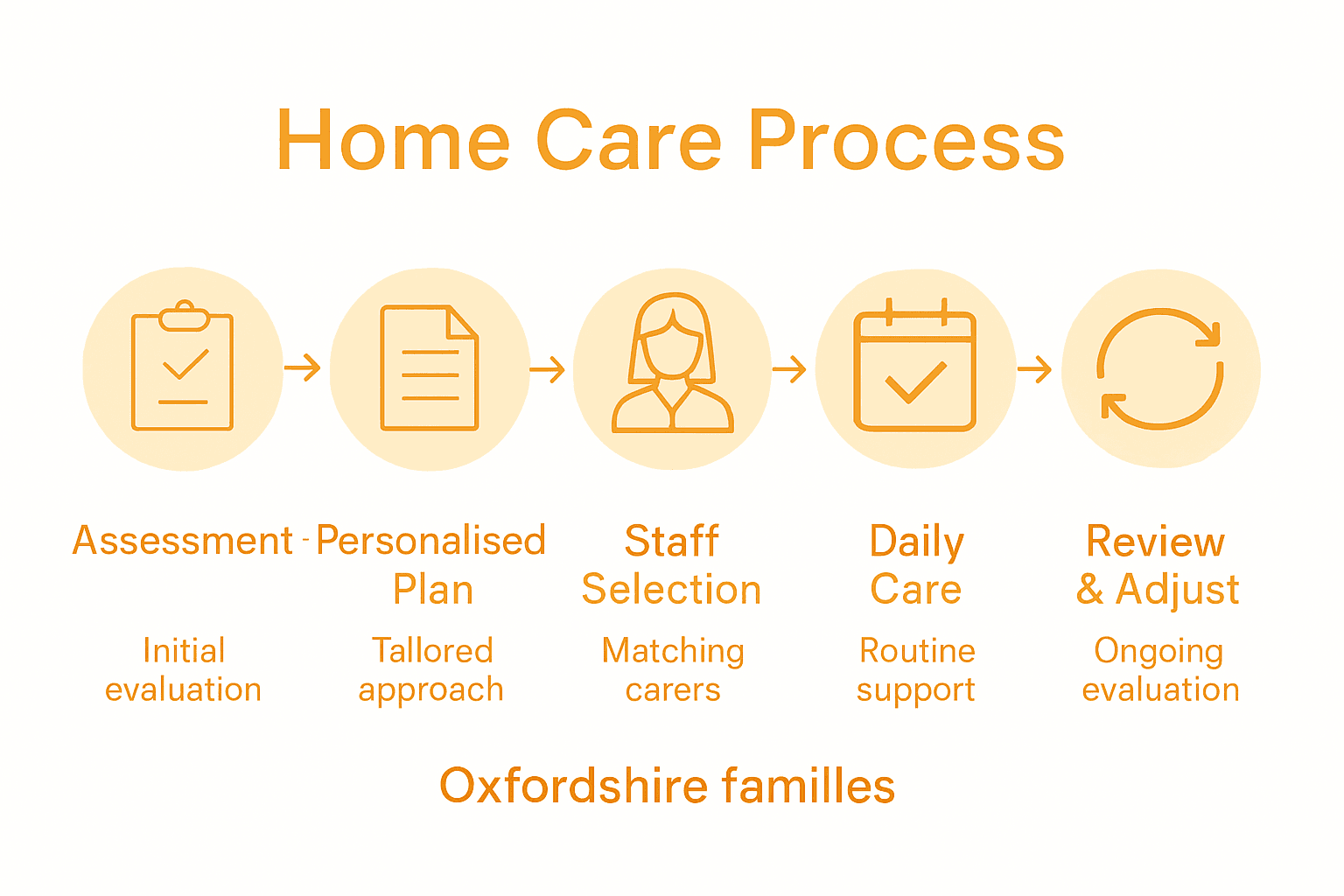
Schedule consistent review meetings to assess the effectiveness of the care plan. During these sessions, discuss your loved one’s physical and emotional wellbeing, review recent care logs, and gather feedback from both the care recipient and care staff. Be prepared to make nuanced adjustments that reflect changing health conditions, personal preferences, or lifestyle modifications.
Community care teams recommend a dynamic, personalised approach that goes beyond basic task completion. Encourage care staff to build genuine relationships, understand individual preferences, and provide support that respects your loved one’s dignity and independence. This means looking beyond physical care needs to address emotional and social wellbeing.
Utilise technology and communication tools to enhance monitoring. Consider digital platforms that allow real-time updates, medication tracking, and secure information sharing between family members and care professionals. These tools can provide transparency and peace of mind while ensuring comprehensive care management.
Professional tip: Develop a feedback mechanism that allows your loved one to express their comfort level and satisfaction with care services, ensuring their voice remains central to the care experience.
Step 5: Review outcomes and adjust support as needed
Reviewing care outcomes and making thoughtful adjustments is a critical ongoing process that ensures your loved one receives consistently personalised, high-quality support. This dynamic approach allows you to respond proactively to changing health conditions, preferences, and capabilities.
Oxfordshire’s adult social care services demonstrate exceptional commitment to continuous improvement through systematic outcome reviews. Establish a structured evaluation process that includes comprehensive assessments of physical health, emotional wellbeing, social engagement, and overall quality of life. These reviews should occur at regular intervals, typically every three to six months, or more frequently if significant changes occur.
During review sessions, gather input from multiple perspectives. Engage your loved one directly, consult with care staff, review medical reports, and include insights from family members and healthcare professionals. Look for patterns in care logs, medication effectiveness, mobility changes, and emotional indicators that might suggest necessary modifications to the existing care plan.
Community Partnership Teams emphasize the importance of flexible, responsive care strategies that adapt to individual needs. Be prepared to make nuanced adjustments such as modifying care hours, introducing new support techniques, updating assistive technologies, or revising communication approaches. The goal is to maintain independence while providing precisely targeted support.
Document all review findings meticulously, creating a clear trail of decision making and highlighting the rationale behind any care plan modifications. This documentation serves as a valuable resource for future reference and ensures transparency across your care support network.
This table compares regular care plan reviews with ad hoc adjustments:
Review Type | Purpose | Frequency | Key Benefit |
Scheduled review meetings | Evaluate overall effectiveness | Every 3–6 months | Proactive, thorough updates |
Ad hoc plan adjustments | Address emerging situations | As needs change | Responsive, flexible support |
Professional tip: Create a collaborative environment where your loved one feels empowered to share their perspectives, ensuring that care adjustments genuinely reflect their evolving needs and preferences.
Compassionate Home Care Process That Supports Every Step of Your Loved One’s Journey
The journey to finding personalised and reliable home care in Oxfordshire can feel overwhelming when faced with assessing needs, designing care plans, selecting skilled carers, and monitoring quality. If you want to ease these challenges and ensure your loved one receives dignified, compassionate support tailored precisely to their unique health and emotional needs, Chamomile Care is here to help. With over 40 years of experience and a CQC Outstanding rating, we provide expert guidance and hands-on assistance throughout the entire care process.
Choose care you can trust:
Skilled staff trained to support conditions like dementia, Parkinson’s and physical disabilities
Customised care plans developed with you and your family’s input
Continuous monitoring to adapt care as needs evolve

Discover how Chamomile Care’s trusted team transforms complex care into a personalised experience designed for comfort and independence. Don’t wait until needs escalate. Visit Chamomile Care’s website now to explore our tailored home care services and begin your consultation for compassionate support today.
Frequently Asked Questions
How do I assess the individual care needs of my loved one?
Begin by scheduling a detailed consultation with healthcare professionals who can conduct an objective assessment. Gather comprehensive information about their health, daily living capabilities, and specific challenges to create a tailored care plan.
What should be included in a personalised home care plan?
A personalised home care plan should document specific care requirements, including mobility assistance, personal hygiene support, and medication management. Ensure the plan remains flexible and is regularly reviewed to adapt to changing needs over time.
How can I select skilled care staff for home support?
When selecting care staff, assess their emotional intelligence, communication skills, and experience with similar conditions. Focus on building rapport through initial meetings, and consider arranging trial visits to observe their compatibility with your loved one.
What steps should I take to monitor the quality of daily care?
Implement a systematic approach to track care delivery, including daily logs and regular check-ins with care staff. Schedule consistent review meetings to assess the effectiveness of the care plan and make necessary adjustments based on feedback from your loved one and care professionals.
How often should I review care outcomes and adjust support?
Aim to review care outcomes every three to six months, or more often if significant changes occur in your loved one’s condition. Gather input from care staff and family members to inform any necessary adjustments to the care plan, ensuring it remains responsive to evolving needs.
Recommended
Comments